30 Easy Wildflower Drawing Ideas for Beginners Simple Sketches to Try
Wildflower Drawing is a great opportunity to take in nature while improving your drawing abilities. Flowers come in a variety of forms and shapes, which makes them ideal subjects for beginners who wish to learn how to draw without getting overwhelmed. Drawing flowers can be an enjoyable creative process that allows you to slow down and concentrate on the smallest aspects. The article below will learn simple wildflower drawing suggestions that anyone could sketch. From classic daisies and tulips to wildflower fields and lavender stems. These suggestions can help you gain confidence and get inspired for your next drawing.
What Makes a Wildflower Easy to Draw?
It is not always easy to draw. A lot of wildflowers have simple shapes, which makes them perfect for those who are just beginning. Knowing what makes a flower simple to draw will help you pick subjects that meet your ability level.
Focus on Basic Shapes
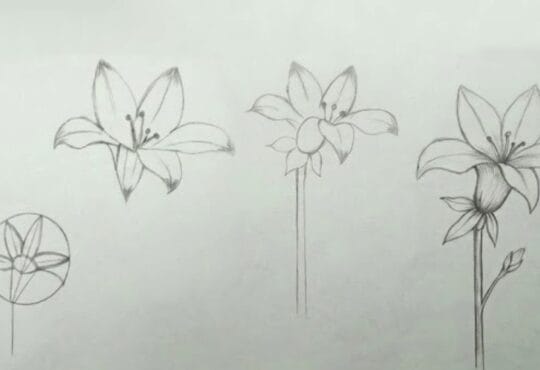
Many wildflowers are broken down into simpler shapes, such as circles, ovals, or curving lines. For instance, a daisy begins with an oval in the middle, and then petals are placed around the circle. If you focus on the fundamental shapes, you’ll be able to build a solid foundation prior to adding more details.
Keep Details Minimal
Many novices attempt to draw each vein, texture, and petal’s details. Instead, draw simple lines. The simple lines usually make a more attractive sketch than one that is cluttered with details. It is possible to make it more textured as you improve your skills.
Begin with Common Wildflowers
Daisies and poppies, as well as buttercups and lavender, are easy to identify and easy to sketch. They are easy to draw and have recognizable shapes, making them ideal exercises for artists who are just beginning their careers.
Basic Supplies for Simple Wildflower Drawings
There is no need for expensive art supplies to draw gorgeous wildflower sketches. A few simple tools are all you need to begin.
Pencil
A regular HB pencil is ideal for drawing outlines and basic designs.
Eraser
An eraser can help you fix mistakes and enhance your drawing while you work.
Fine Liner Pen
Fine liner pens are great for lining up sketches and providing definition.
Sketchbook or Drawing Paper
A sketchbook is a place to record your ideas. an opportunity to regularly practice and monitor your improvement.
Optional Colored Pencils or Markers
Color can bring your drawings of wildflowers to life. Colored markers and pencils are fantastic options for novices.
30 Simple Wildflower Drawing Ideas Anyone Can Sketch
1. Classic Daisy Drawing
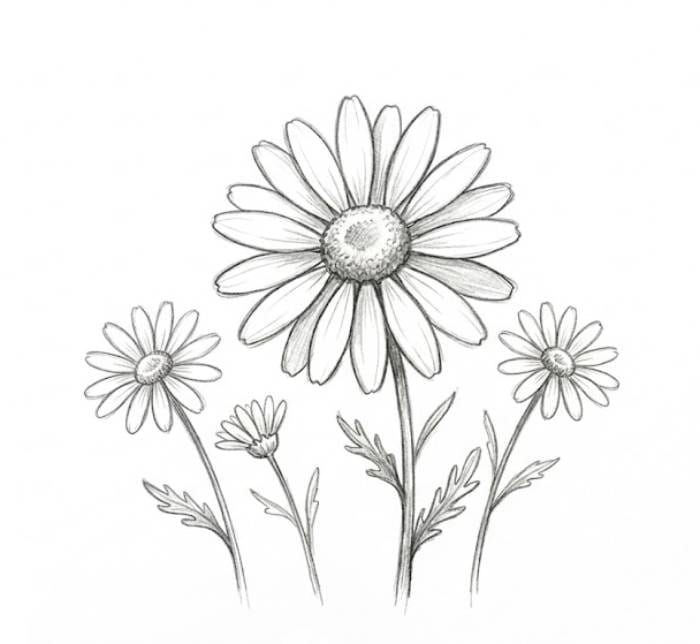
A daisy is among the most simple flowers to draw because of its simplicity. Start by drawing an unassuming circle as the center, then create long oval-shaped flowers around the circle. The petals should be slightly uneven to make the appearance more natural. You can draw just one daisy or make a cluster of daisies that are different in size. This drawing is great for learning symmetry and proportions of flowers.
2. Poppy Wildflower Sketch
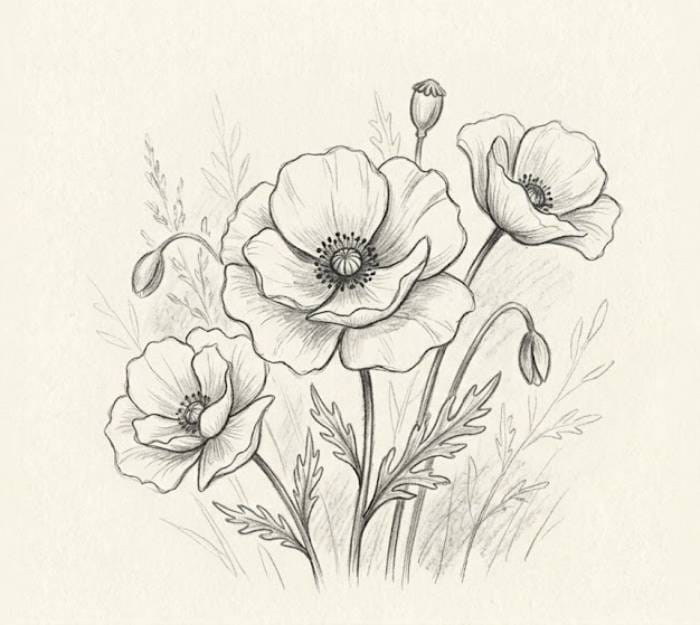
The poppies are famous for their delicate, paper-like flowers. Start by drawing a small center, and then draw four petals that are loose around the center. A beautiful poppy is due to its unique form, so don’t stress about creating a uniform look for each flower. A light shade can give the illusion of petals folded.
3. Black-Eyed Susan Drawing
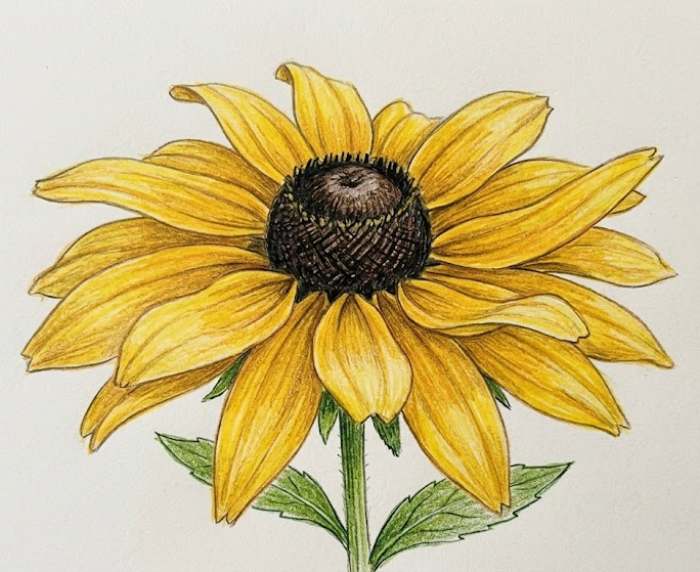
This vibrant wildflower has the dark center that is that is surrounded by golden petals. Draw a circular outline of the center first, then add long petals that radiate outward. The slight overlap of petals gives the sketch more dimension. This flower is perfect to learn how to draw layers within a sketch.
4. Cornflower Sketch
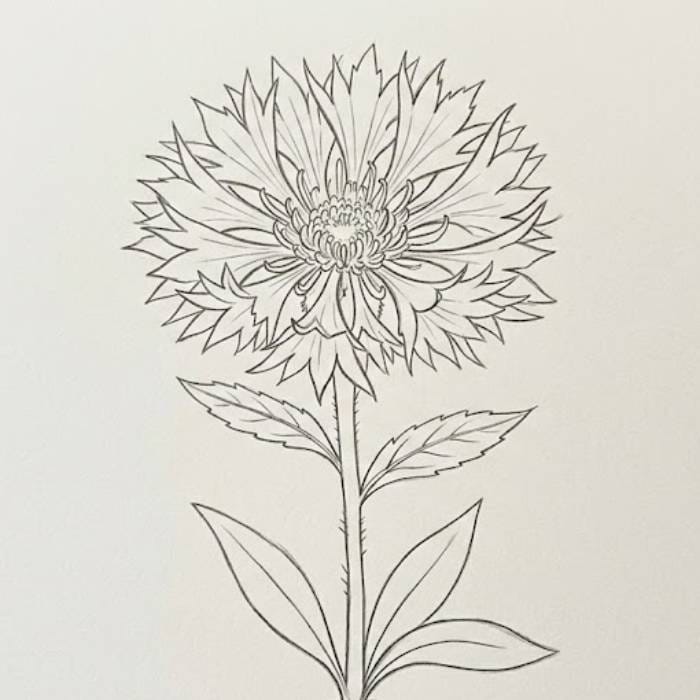
Cornflowers are characterized by their unique, spiky petals that stand out. Begin with a small central circle, then add pointed, sharp petals surrounding it. The petals do not have to be perfectly straight. This drawing is great for artists looking to expand beyond simple rounded flowers.
5. Buttercup Drawing
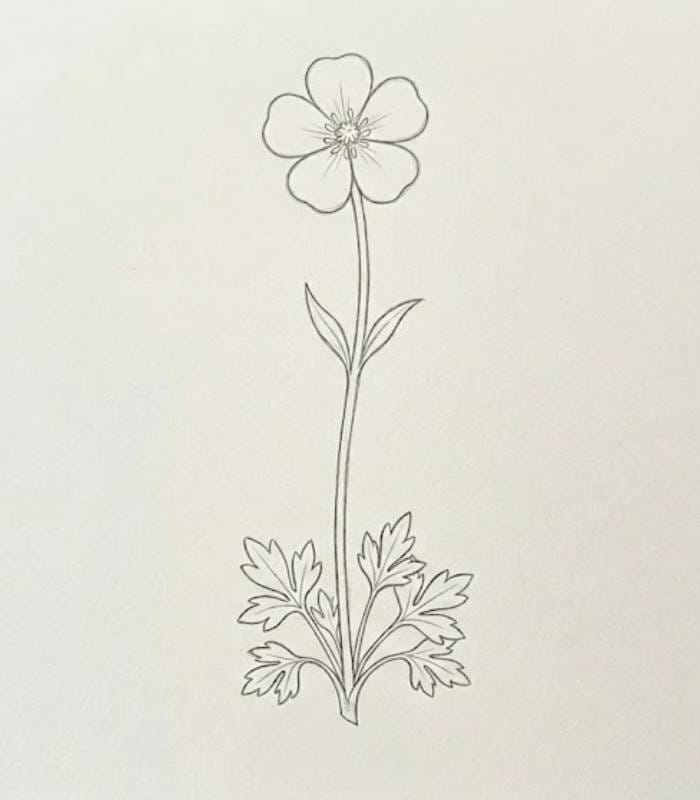
Buttercups are small, cheerful flowers with five petals that are rounded. Their basic design makes them ideal for children. Draw a tiny central area and then surround the center with smooth curving petals. Add a thin stem and tiny leaves to finish the sketch.
6. Lavender Stem Drawing
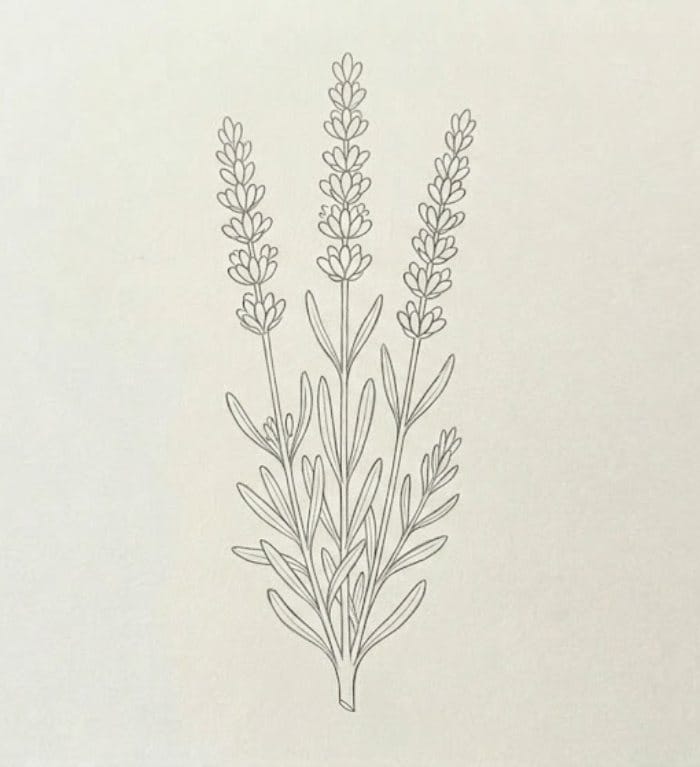
Lavender is an excellent option to practice repeating forms. Begin with a tall stem and then add small flower clusters on the top. Instead of drawing every flower, make small teardrops and oval forms. This flower is stunning in greeting cards and sketchbooks as well as journal ornaments.
7. Wild Rose Sketch
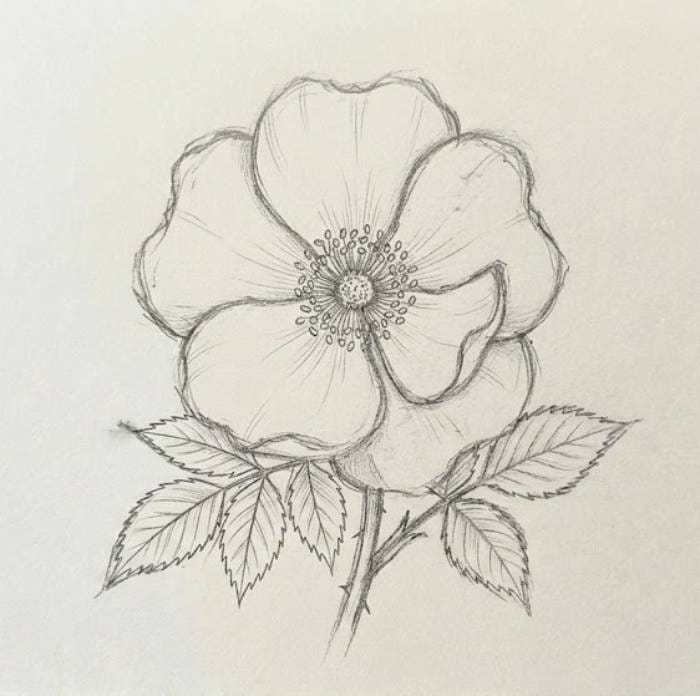
In contrast to garden roses, wild roses are characterized by the same basic five-petal structure. Begin with a circle and then draw rounded petals around the center. Include a few leaves with sharp edges to add more detail. This flower is great for helping beginners understand how overlapping petals that overlap make depth.
8. Bluebell Flower Drawing
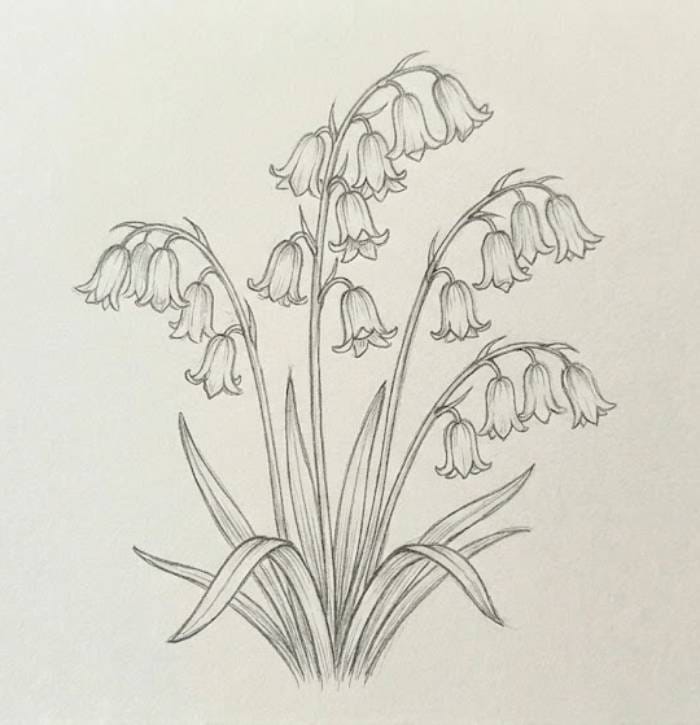
Bluebells dangle gracefully from curving stems. Draw a gentle bend in the stem initially, and then add bell-shaped flowers that hang downwards. Their distinctive design makes them an exciting alternative to traditional floral sketches. A clump of bluebells could make a beautiful landscape.
9. Coneflower Sketch
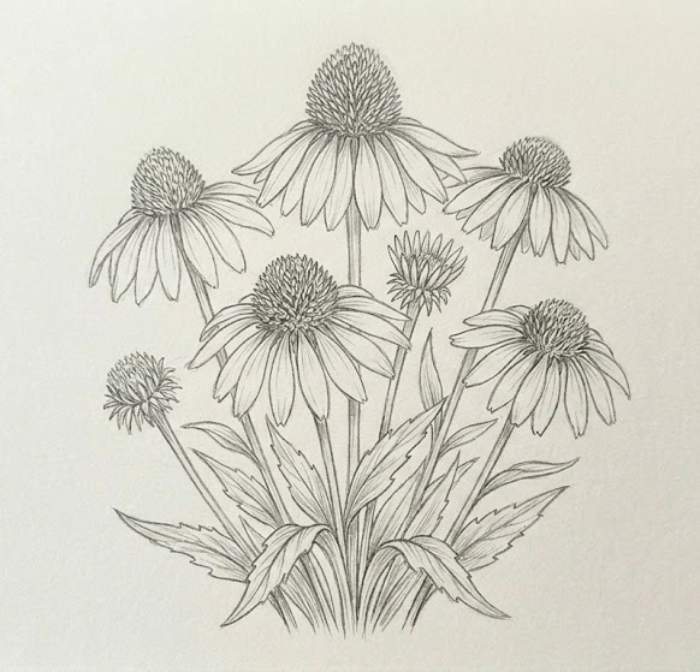
Coneflowers can be identified by their big, soaring centers and drooping flowers. Create the cone-shaped or oval center and then surround the center with long petals that bend slightly downwards. This flower can be used as a model to create texture in the center while making flowers simple.
10. Lupine Flower Drawing
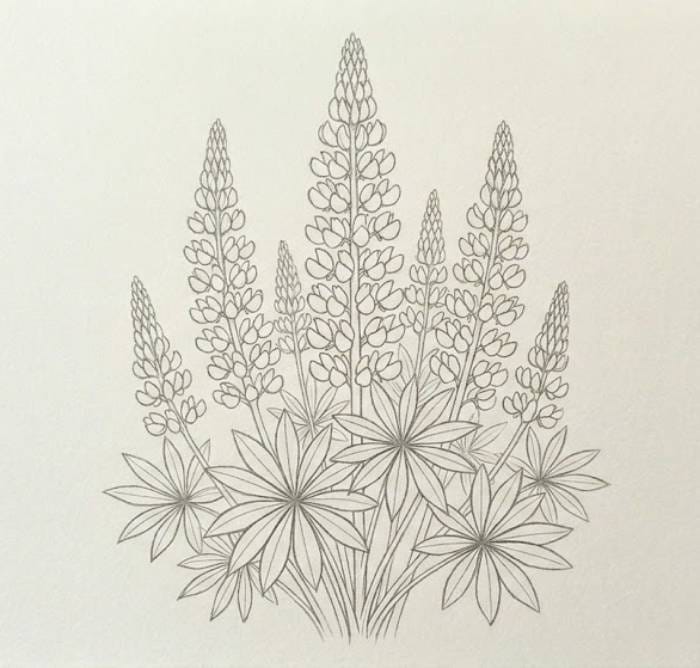
Lupines bloom in large flower spikes that are covered in many flowers. Begin by creating the shape of a triangular long piece to define your flower spike. Then, fill the outline with small flower clusters. This drawing shows the beginner how to make the illusion of texture and repetition without drawing each element individually.
11. Cosmos Wildflower Sketch
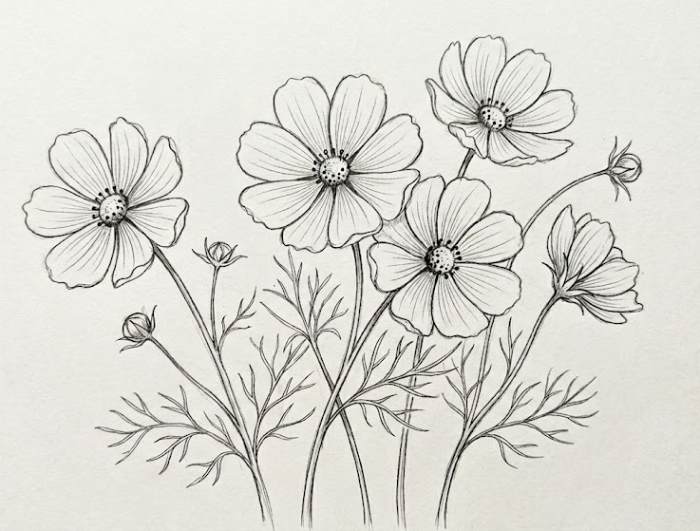
Cosmos flowers are delicate with delicate petals and slim stems, giving them a classy appearance. Draw a tiny center circle and then cover it with broad, uneven petals. Their open shape makes them easy to draw while looking beautiful and precise.
12. Sunflower-Inspired Wildflower Drawing
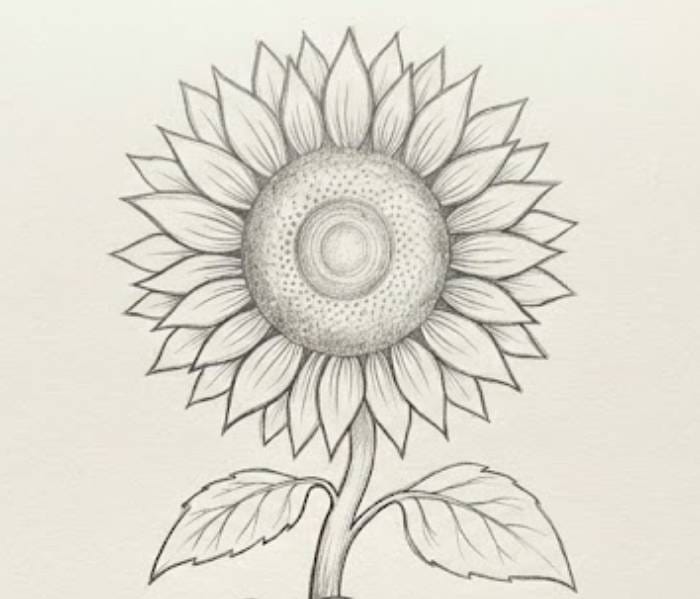
A wildflower-inspired sunflower drawing is great for practicing large-scale forms. Start with a huge central disk, then add the rows of pointed petals surrounding the center disk. The dimension of the flower makes it easy to pay attention to specifics or shading strategies.
13. Chicory Flower Sketch
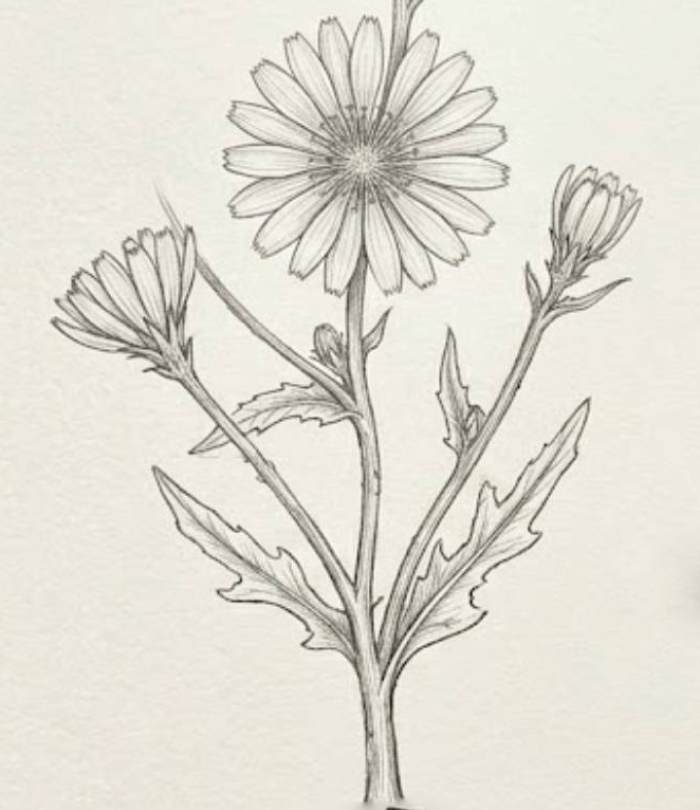
The chicory flower has many delicate petals extending across the middle. Draw a small circle, then draw short lines to form thin petals around the circle. This flower is great for artists looking to play with the texture and intricate specifics.
14. Dandelion Bloom Drawing
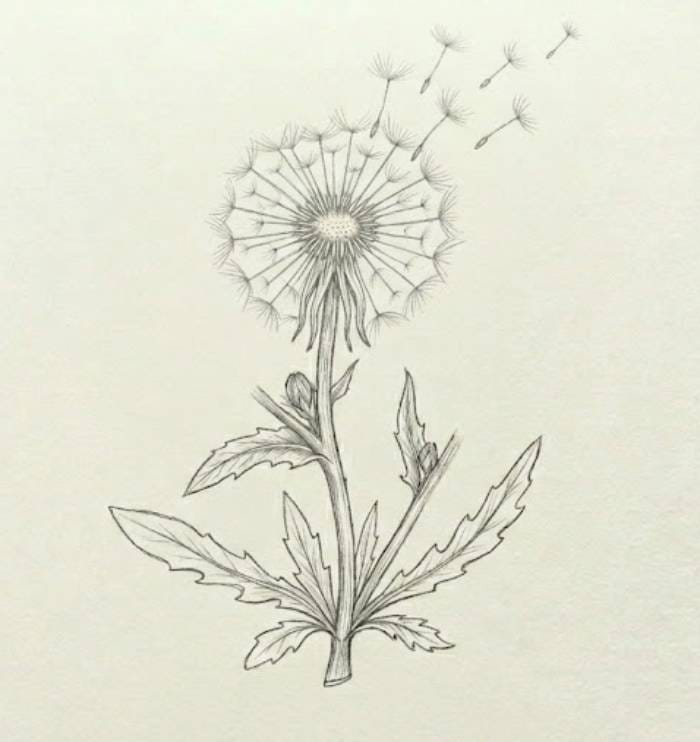
The bright yellow dandelion flower might appear detailed, but it can be reduced to a few tiny strokes radiating towards the central. Try to create an airy texture instead of drawing each flower. This flower is perfect to practice line control.
15. Dandelion Seed Head Sketch
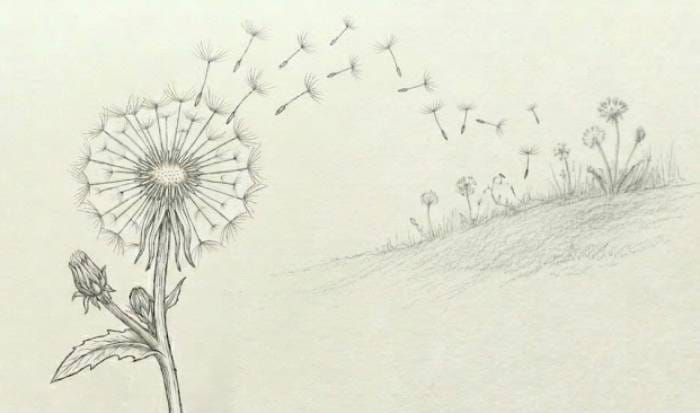
A head of dandelion seeds offers an entirely different challenge to draw. Start with a tiny circle, then draw thin lines that extend outward. Attach tiny seed shapes to the edges of the lines. The result is an airy and light appearance, which is beautiful in minimalist art.
16. Goldenrod Wildflower Drawing
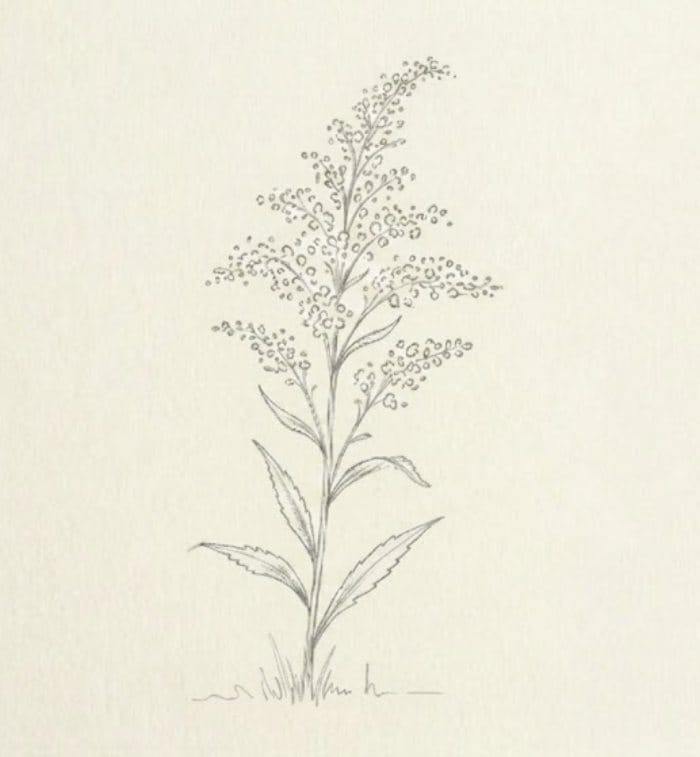
Goldenrod is made up of a variety of tiny flowers, arranged together on stems that branch. Begin by drawing the overall shape, then add dots in small clusters and circles. This helps to create the illusion of many blooms without a lot of details.
17. Oxeye Daisy Sketch
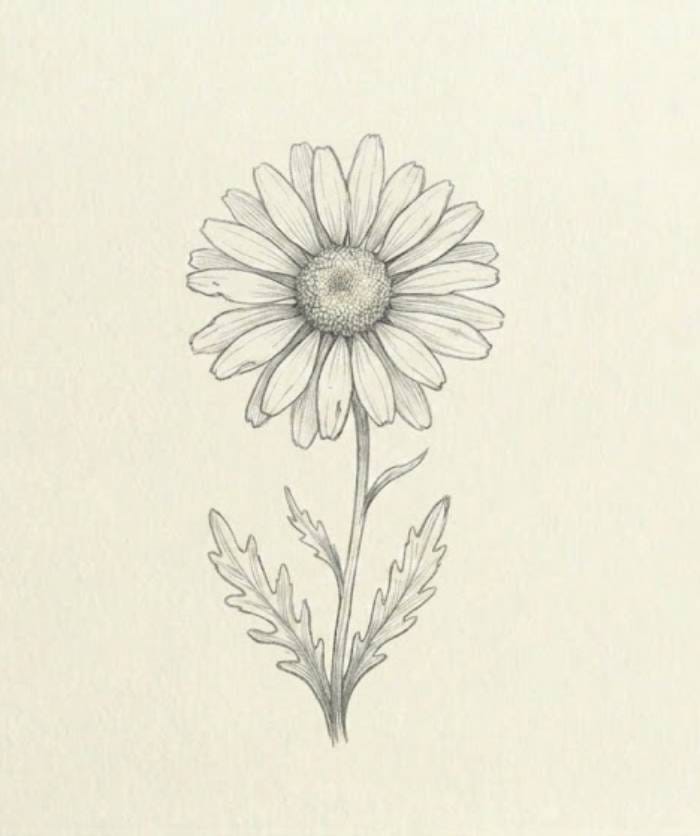
The oxeye daisy has a similar appearance to the typical daisy but usually offers a more natural, wild appearance. Create a central disk, then surround it with petals that are slightly uneven. Altering the length of the petals can make the flower feel more real and less stiff.
18. Forget-Me-Not Drawing
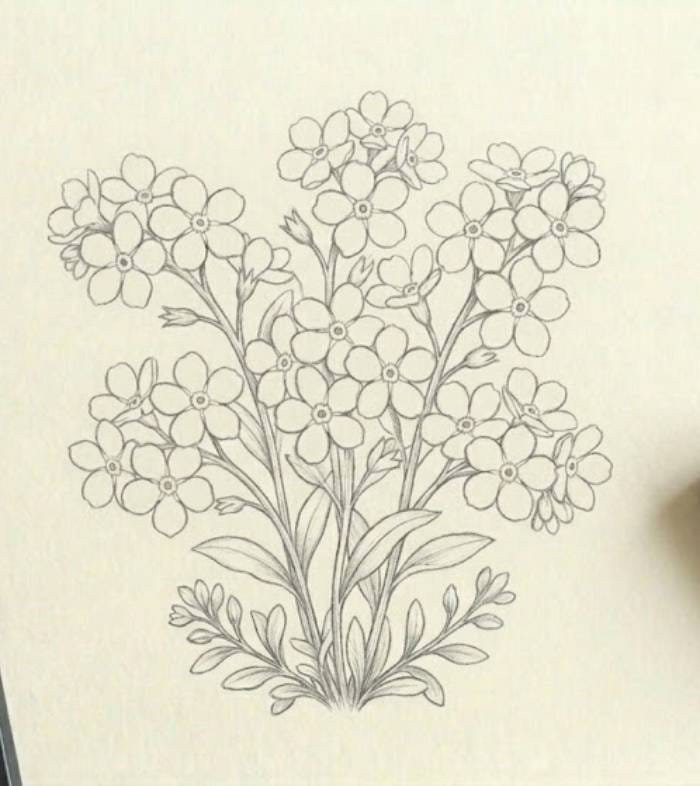
Forget-me-nots are a small flower with five petals that are rounded with a bright central. They usually grow in groups. The combination of several makes a more complete and appealing composition. Their simplicity makes them perfect for first-time training.
19. Wild Violet Sketch
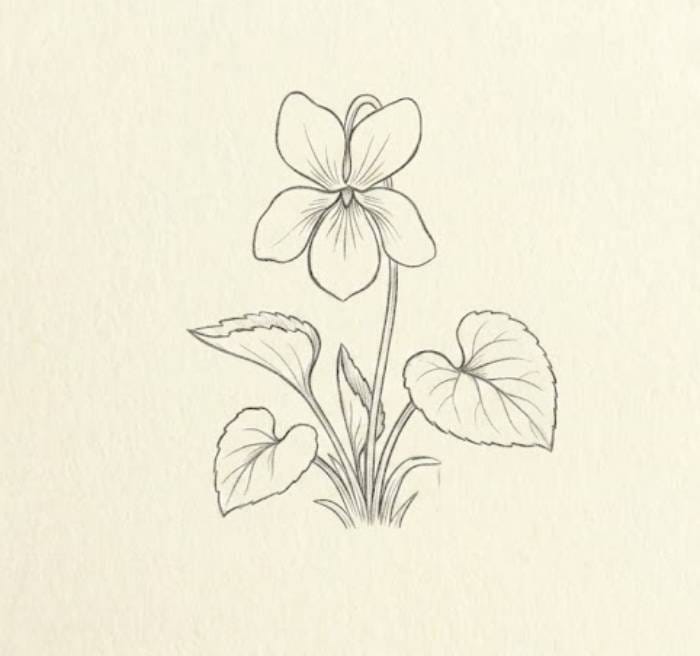
Wild violets are distinguished by their arrangement of petals that have larger lower petals as well as lower petals that are smaller. Begin by sketching the basic shapes of the petals and then include a few leaves. This flower is designed to help beginners get started sketching less symmetrical floral designs.
20. Yarrow Flower Drawing
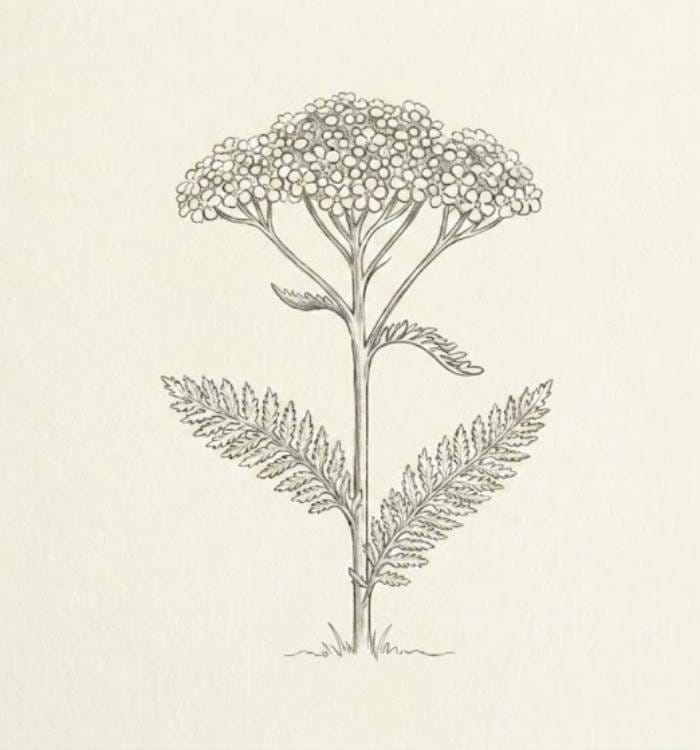
The flowers of yarrow form flat clusters composed of many tiny blooms. The overall shape of the cluster is drawn first, and then create tiny circles or flower shapes within the shape. This method simplifies what may seem like a difficult matter.
21. Clover Blossom Sketch
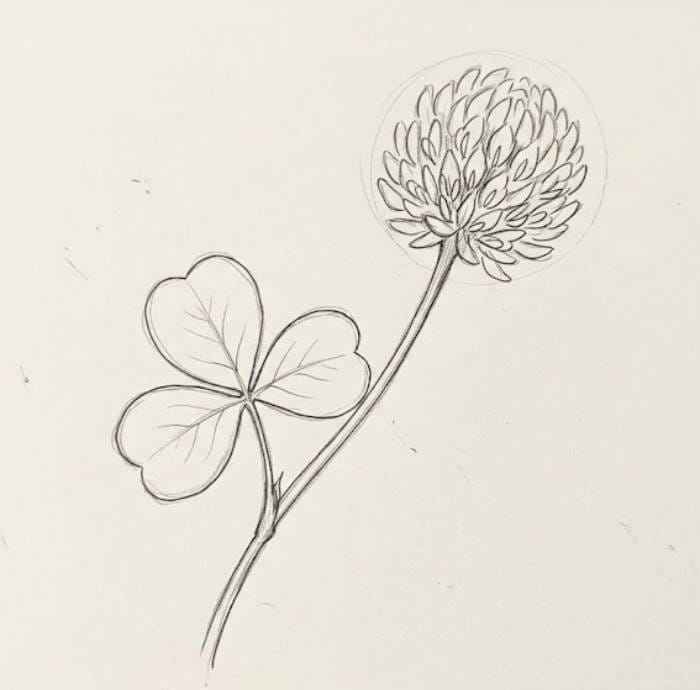
Clover blossoms comprise a variety of tiny petals that are packed into an elongated shape. Start with the outline of a circle, then decorate it with tiny, like, petal markings. You can add a stem and the well-known three-part clover leaf to complete the design.
22. Queen Anne’s Lace Drawing
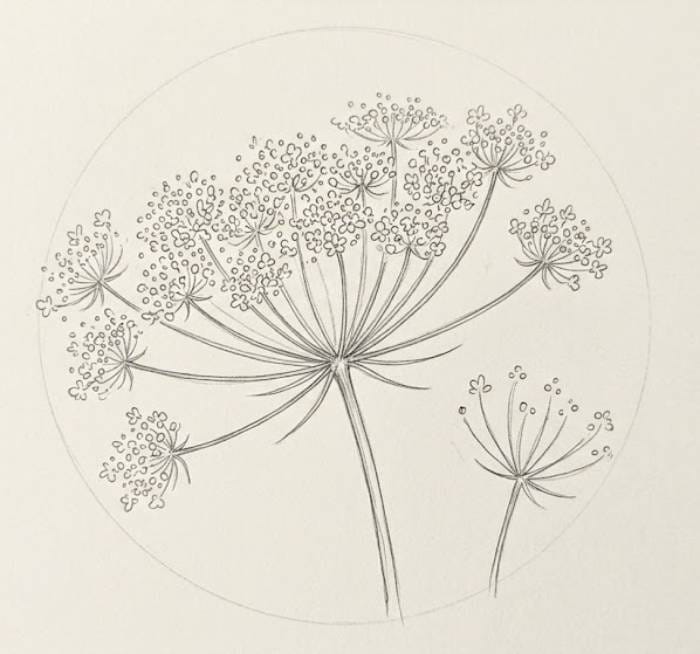
Queen Anne’s Lace creates an umbrella-like cluster of flowers. Begin creating thin stems extending outwards from the center. Add dots or tiny flowers at the ends. The result is a beautiful and intricate sketch that is extremely easy to make.
23. Small Wildflower Bouquet
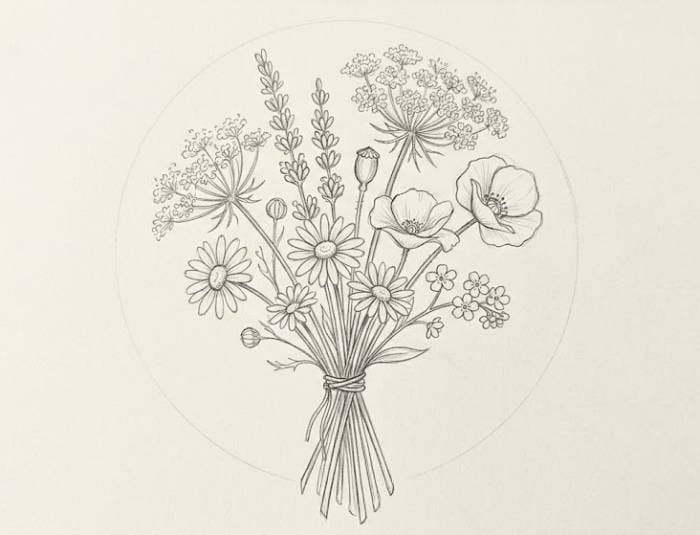
Instead of focusing solely on one flower, blend many wildflowers in one bouquet. Mix lavender, daisies, poppies, and forget-me-nots to create a variety. This activity helps you learn space, composition, and balancing various flowers within one drawing.
24. Minimalist Wildflower Line Drawing
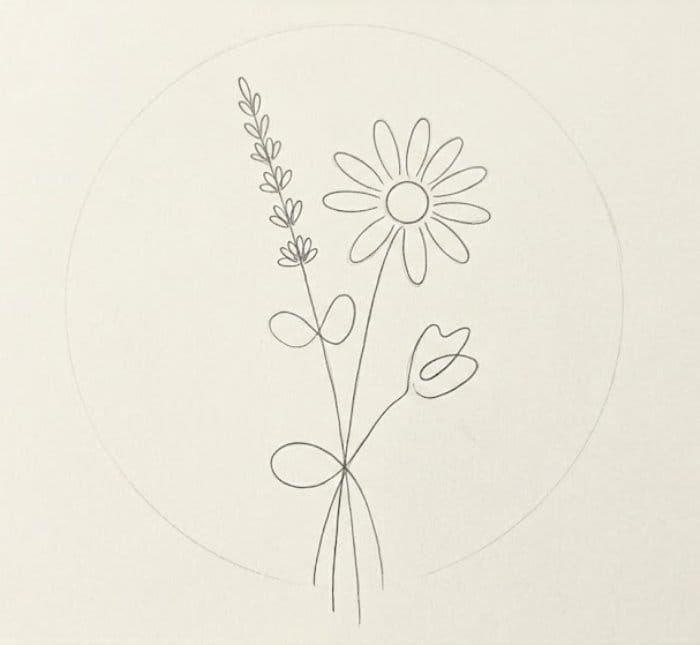
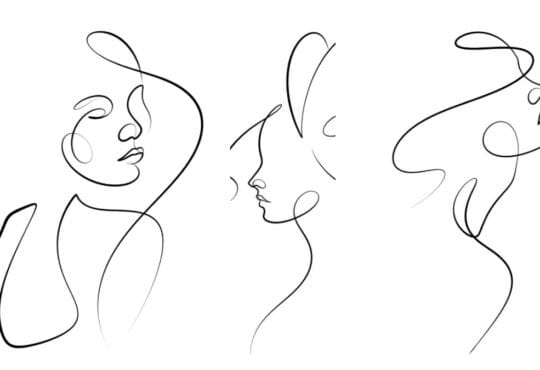
Minimalist flower art makes use of simple, continuous lines to make easily identifiable floral designs. Select a flower, such as the daisy or lavender flower, and draw it using the smallest lines you can. This contemporary style is ideal for artwork, logos, and journals.
25. Wildflower Field Scene
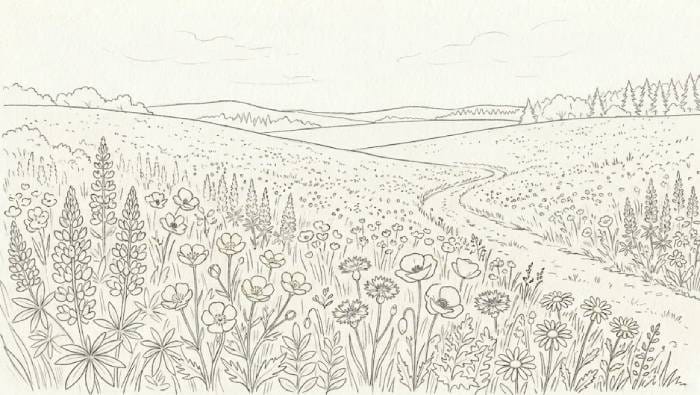
A field of wildflowers allows you to blend all the flowers in this list into one large sketch. Draw a simple landscape using flowers scattered throughout the background. Utilize smaller flowers further away and larger ones closer to the viewer to give depth. This is a fantastic method to improve composition and take in nature’s beauty with wildflowers in their natural surroundings.
26. California Poppy Drawing
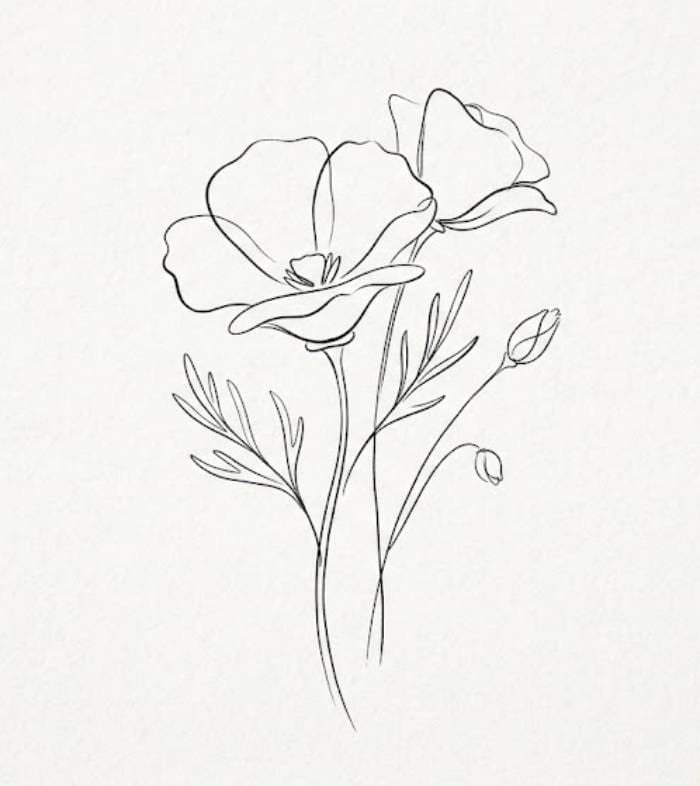
California poppies have cup-shaped flowers and petals that are smooth and flowing. Begin by drawing a small, bowl-shaped center. Add four broad petals which gently overlap. To capture the delicate look of the flower, keep the lines soft and slightly curvy. Focus on the silhouette of the flower and a few thin leaves for a minimalist version. This drawing is great for practising simple petal shapes.
27. Bluebonnet Drawing
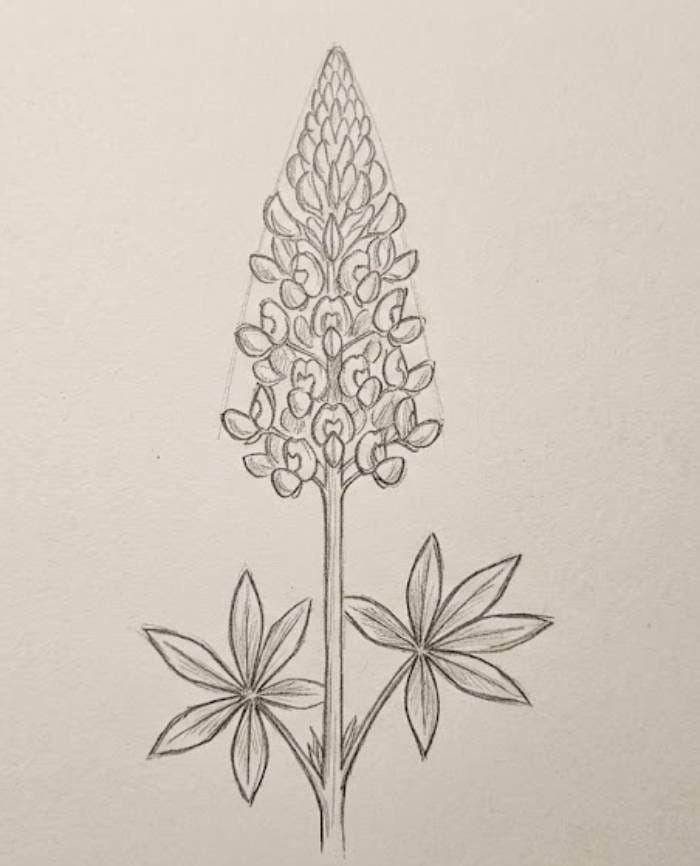
Bluebonnets are tall spikes of flowers covered in small blooms. Start with a long, straight stem. Draw a narrow cone to outline the cluster of flowers. Instead of drawing each flower individually, fill the shape with small groups of petals. Add some pointed leaves at the base. This wildflower can be used to learn repetition and texture using simple line work.
28. Indian Paintbrush Wildflower Drawing
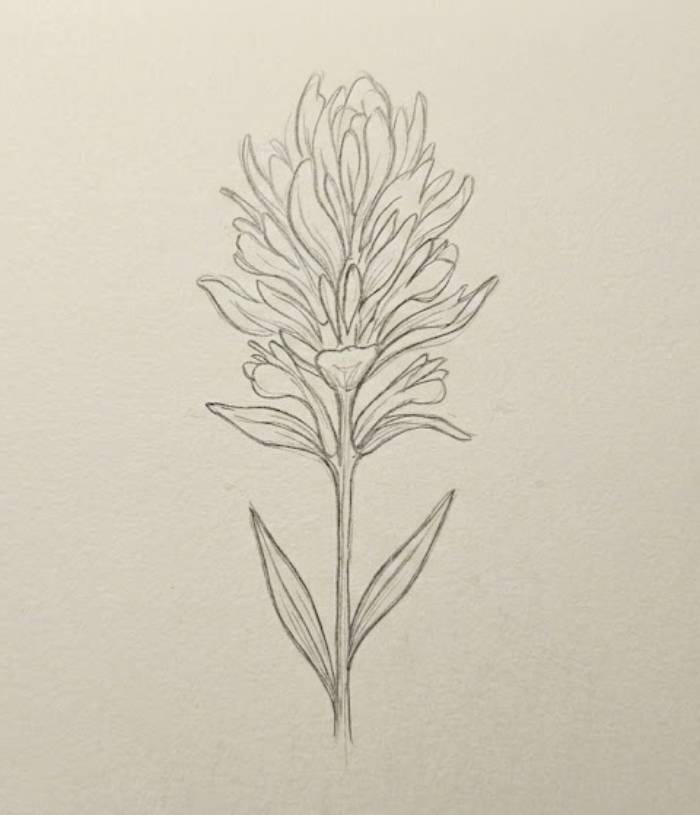
Indian Paintbrush Flowers are recognized by bright bracts, which resemble paint strokes. Sketch upward-pointing leaves at the top of the stem. Use flowing lines to give the appearance that the petals are layered. The flower is perfect for artists who wish to experiment with organic shapes and movement without having to worry about symmetry.
29. Aster Flower Sketch
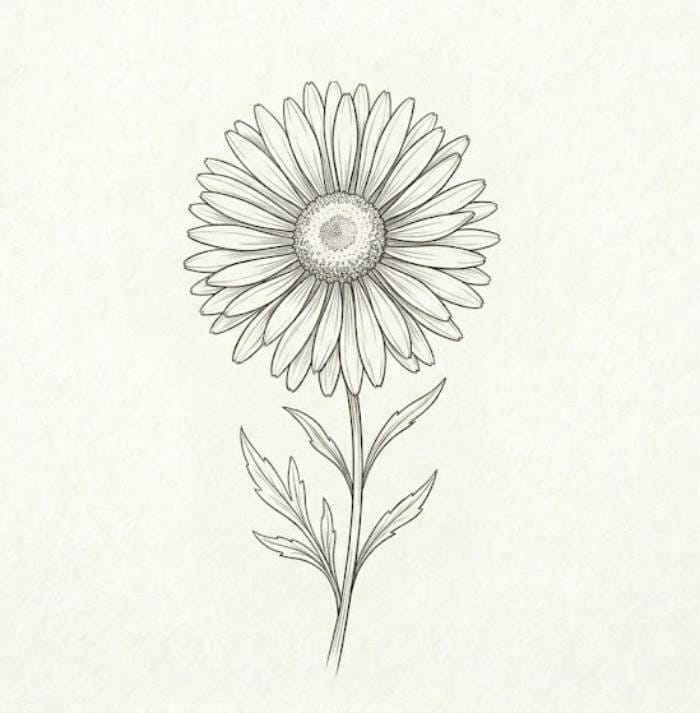
Asters have a tiny center that is surrounded by numerous tiny petals. Create a circular central area first, and then add thin petals that extend outward in multiple layers. The petals can differ slightly in length to give an authentic appearance. This flower is great for beginners to practice elaborate petal arrangements while keeping a basic overall design.
30. Blanket Flower (Gaillardia) Drawing
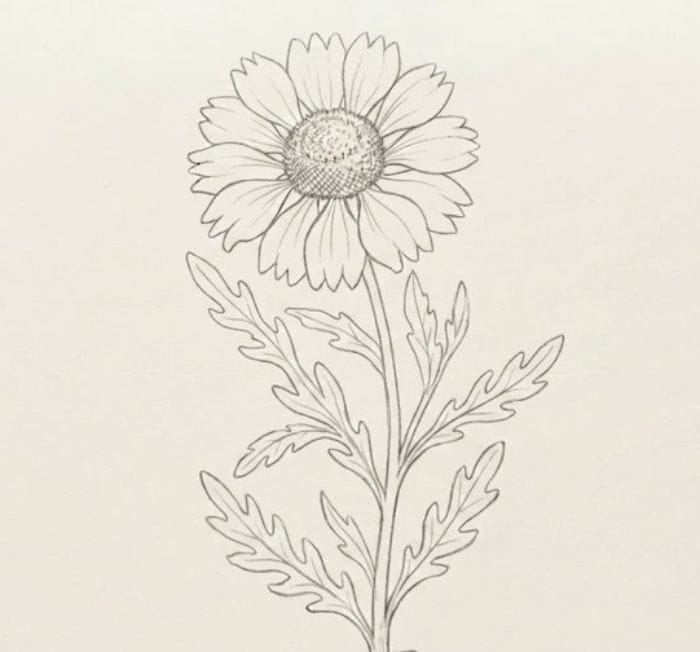
The petals of blanket flowers are rounded and often have jagged edges. Begin with a large, circular center. Add broad petals all around. For a more realistic look, allow some petals to curve inward. This flower is easy to draw because of its bold shape. It’s also a good choice for learning about flower proportions and composition.
Tips for Improving Your Wildflower Drawings
Drawing wildflowers takes patience, but a few basic habits can make you progress quicker. The good thing is that you don’t require formal art education to draw beautiful flower drawings. A consistent practice routine and a keen eye can have a significant impact.
Observe Real Flowers
One of the most effective methods to enhance how you can improve your wildflower drawing skills is to look at real flowers as often as you can. Take a walk through a garden, park or nature trail, and examine the patterns of the petals, leaves and stems.
Note that the flowers aren’t completely uniform. There are overlaps, others are slightly bent, and some might be smaller or larger than the others. The natural variations in flower drawings appear more realistic.
If you can’t see blooms in real life, you can use photographs of high quality for reference. The visual representation of real flowers helps you learn more about how flowers grow and how their forms connect.
Practice Light Sketching First
Many novices press too hard with their pencils right at the beginning. Instead, try using gentle strokes to build the basic shape that will form the structure of your flower.
Light sketching lets you:
- Make corrections quickly
- Make adjustments to proportions
- Play around with the placement of petal
- Make sure you are confident before adding more details
When you are satisfied with the overall appearance, it is possible to darken key lines and remove any marks that are not needed.
Experiment with Different Styles
Wildflowers are drawn in a variety of different ways. Experimenting with different styles can help you find what you like best.
Some popular styles include:
Realistic Style
Be focused on the correct details, shapes, shading and other details.
Cartoon Style
Make use of simple petals, bold outlines and fun designs.
Minimalist Style
Make flowers with just the lines and shapes of a few lines.
Doodle Style
You can draw flowers without stressing about the perfect drawing.
The exploration of different methods helps keep drawing interesting and avoids burnout in the creative process.
Add Color Gradually
The color of a sketch into an enthralling piece of art. But it’s recommended to concentrate on drawing skills first and coloring later.
If you add color:
- Begin with lighter layers
- Color gradually builds up
- Highlights should be left where sunlight naturally hits petals
- Mix similar shades together
Colored pencils are particularly useful for those who are new to the art of drawing because they provide excellent control and allow for gradual color development.
Common Mistakes Beginners Make
Every artist has mistakes when learning. Learning to recognise common issues can assist you in avoiding frustration and help you improve your drawing more quickly.
Drawing Petals Too Uniformly
Nature is never flawless. A lot of beginners create every flower identical in size, shape and color.
Instead, you should allow little differences between petals. Certain petals may be curlier than others, while some might overlap. This makes flowers appear more natural.
Overcomplicating Simple Flowers
It’s easy to get overwhelmed by the details. Beginning students often try to draw every single texture they can see.
Begin with the overall design first. When the structure is good, only add the most important elements. The simpler the structure, the better.
Ignoring Stem and Leaf Proportions
Many artists are focused on the head of the plant and overlook the other parts of their plant.
Pay close attention to:
- Stem thickness
- Leaf size
- Leaf placement
- Proportions of flowers to stems
Proper proportions and balance make the drawing to feel more realistic.
Not Enough Pressure Using the Pencil
The marks of heavy pencils are hard to erase and make drawings appear messy.
Relax your grip and apply moderate pressure during the initial stages of drawing. Make sure to save the darker lines for your final outline.
Comparing Your Work to Others
A common mistake novices make is to expect expert results in a matter of minutes.
Keep in mind that each artist develops at their own rate. Try to improve a bit with each sketch, rather than an ego-driven comparison with other artists.
Frequently Asked Questions (FAQ)
What Is the Easiest Wildflower to Draw?
The daisy is frequently regarded as the most straightforward wildflower to draw. Its simple circular shape and equally separated petals make it a great choice for beginning artists. Buttercups and forget-me-nots can also be great choices due to their simple designs.
Can Beginners Draw Wildflowers Without Art Experience?
Yes. Wildflowers are among the subjects that are most accessible to drawing for beginners. There are many wildflowers that can be drawn with the help of basic ovals, circles, and curved lines. Through regular practice, anyone is able to draw them.
What Pencils Work Best for Flower Sketches?
An HB pencil can be the ideal starting point, as it produces clear lines and is simple to erase. A lot of artists use the following:
- 2H pencils are great for light sketches.
- The HB pencils are used for general drawing
- 2B pencils for dark details and shading
It is not necessary to have an extensive collection of pencils in order to begin.
How Can I Make a Simple Flower Drawing Look Better?
A variety of techniques can enhance the basic sketch of a flower:
- Make images a reference
- Light shading
- Petal sizes vary slightly.
- Draw confident lines
- Include stems and leaves
- Regularly practice
Even the smallest changes can make an impact on the final outcome.
Should I Use Reference Photos When Drawing Wildflowers?
Yes. Photos of reference assist you in understanding flower structure, dimensions, proportions, and other specifics. Numerous professional artists utilize reference photos frequently.
References are not meant to necessarily mean copying. Instead, it assists in training your eyes to recognize patterns and shapes with greater precision.
How Often Should I Practice Wildflower Drawing?
Consistency is more important than long drawing sessions. A mere 10 to 15 minutes of practice a couple of times a week will aid in your progress over time.
A small sketchbook dedicated to drawings of flowers is a fantastic way to monitor your development.
Can Wildflower Drawings Be Used for Other Art Projects?
Absolutely, the sketches of wildflowers are suitable for:
- Cards for greetings
- Wall art
- Journal pages
- Scrapbooks
- Stickers
- Bookmarks
- Handmade gifts
Simple flower illustrations are versatile and can be used to various creative ideas.
Conclusion
Wildflower Drawing is an enjoyable opportunity to develop your artistic abilities while observing natural beauty. It doesn’t matter if you select a traditional daisy or a fragile lavender plant or an entire wildflower field, every sketch gives you the chance to develop your observational skills, imagination, and craft.
The simple wildflower drawing tips included in this book offer an abundance of ideas to artists at all levels. Begin by drawing the ones that are easiest to draw, then focus on the basic shapes, and then explore more intricate patterns as you become more confident.
Keep in mind that progress is made by regular repetition. Every sketch can teach the artist something about lines, shapes, and composition. Keep a sketchbook close by and try different flowers, and don’t be afraid to try new designs.
Keep this collection in mind to use as a source of inspiration in the future and revisit it anytime you require new wildflower drawing ideas. If you’re patient and persistent and practice, you’ll have sketchbooks filled with beautiful drawings of wildflowers that reflect your unique style of creativity.