15 Simple & Easy Drawing Ideas for Beginners to Try Today
You want to learn how to draw but you feel that you are not able even to draw a stick person? You are not alone. Many people believe that drawing is for “talented artists”. This is not true. The best way to learn how to draw is to begin with easy steps. This guide gives you 15 easy drawing ideas as well as simple drawing ideas, perfect for beginners.
Art supplies are not expensive. You only need a pencil, a paper, and an eraser. We want you to feel confident in every drawing that you do. Easy drawing ideas for beginners will help you discover the joy of drawing. Grab your pencil and paper and start drawing!
What makes a drawing idea “easy” for beginners?
What makes a drawing “easy” for a beginner? What makes a drawing idea “easy” for someone new to art?
simple shapes should be used first. Simple drawings are often made with basic shapes such as circles, squares and triangles. These ideas are simpler than complex forms with curves. A house, for example, is a square, with a triangular roof. And a flower begins with a circle, with teardrop-shaped petals.
Second, simple drawings don’t usually require much shading or perspective . It can be difficult to shade things, but it makes them look 3D. Simple ideas allow you to focus only on the basic shapes and outlines. Perspective, which shows what things appear like from a distance, is kept simple, or even avoided.
Third, few, clear steps is key. You can break down a simple drawing idea into a few easy steps. You will know what to do and won’t get lost. This is how our beginner sketches were designed.
Lastly, you will only need the basic tools. Art supplies are not expensive. All you need is a regular pencil (like HB or 2B), an eraser and some paper. We want you to be able to draw as quickly as possible. Focusing on these points will make each idea more achievable, and you’ll feel more confident when drawing. Every little doodle will help you improve and have more fun drawing!
Five Simple and Easy Drawing Ideas for Beginners
Here’s where the fun really begins! These easy drawings ideas are designed to be completed quickly and with maximum satisfaction. Focus on the process, not perfection. Each one is broken down into smaller chunks to make it easier for beginners.
1. Smiling Sun

Let’s start with the classic symbol for happiness and warmth. It is a great way to learn how to draw smooth circles and radiating line. Start by drawing a circle on your paper. Aim for a smooth, steady motion. After you’ve drawn the body of your sun, add some short, cheerful lines or triangles that extend outwards to represent its rays. For a dynamic look, you can change the length of your lines. Give your sun personality by adding two dots or small circles as eyes, and a curved upward line to create a smile. This drawing will teach you the basics of symmetry as well as how to use simple facial expressions.
Pro tip: Color your sun using bright yellow and orange markers.
2. Cute Cat Face

Who doesn’t love a cute cat? This easy drawing idea uses gentle curves and simple shapes to capture the feline charm. Make sure the oval is not too narrow. Add two triangles to the oval for the ears. Each ear has a smaller triangle inside it for details. Position two almond shapes, or dots, for the eyes. Leave space between them. Draw a small inverted triangle below the eyes to represent the nose. Finalize the face by adding a ‘W shape’ or two connected 3s’ for the mouth. Add a few whiskers using simple lines that extend from the cheeks.
Pro tip: Experiment different eye shapes, wide open or half-closed, to give your cat a different mood!
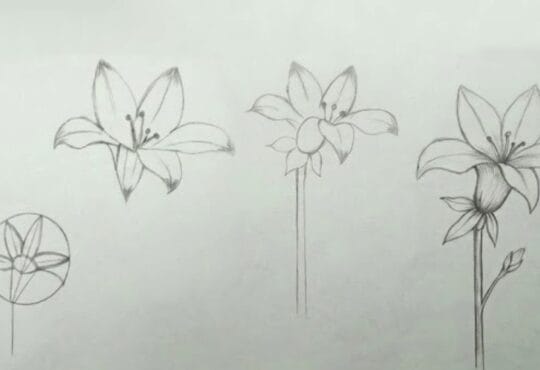
3. Simple Flower

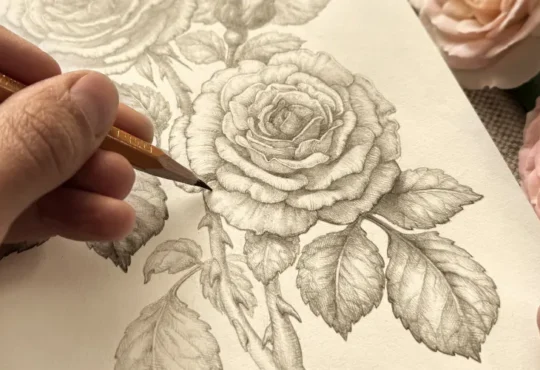
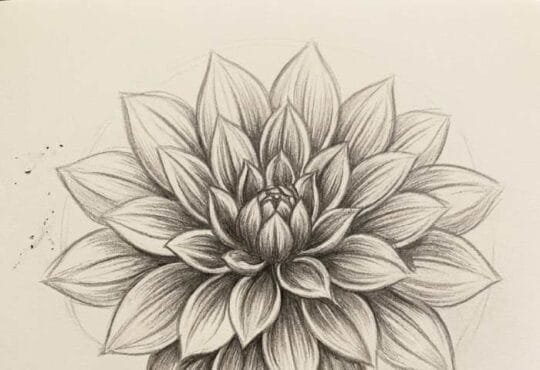
Flowers are the cornerstones of drawing because their diversity allows for endless interpretations. Start by drawing a circle at the center of your flower. This will be the core of the flower. Start by drawing several teardrop-shaped shapes or heart-like gentle curves around this central circle. Arrange them evenly to create the petals. You can overlap them a little if you want to give it a fuller appearance. After you have completed your petals, draw a line down from the base circle to create the stem. Add a few simple leaf shapes with a vein in the middle along the stem.
Pro tip: Use colored pencils to create vibrant bouquets!
4. Cloud with Raindrops

Here is a great drawing idea to practice organic shapes. Start by drawing a lumpy, fluffy shape. Imagine it as a series connected rounded bumps similar to the cartoon clouds you’d see in children’s books. Do not aim for perfect symmetry, as natural clouds are beautifully imperfect. Draw several teardrop shapes under your cloud, with varying sizes and lengths, to suggest rain. Add a few curved, short lines around some of the drops to show movement.
Pro tip: Use a gray wash or light shading to add depth beneath the cloud.
5. Cartoon Ice Cream Cone

Drawing ice cream is fun! Draw an elongated triangular shape for the cone to begin this easy draw idea. This is the base. Draw diagonal lines within the triangle, creating a grid. This will give your waffle cone a classic look. Draw a large rounded shape with wavy waves on top of the cone to represent a single scoop. Make it appear as if it is melting slightly down the sides. Add a small circle for a cherry on top and sprinkles for fun.
Pro tip: Use bright colors and fun flavors for your ice cream. Vanilla, chocolate or strawberry are all great choices!
6. Basic House with Tree

This sketch is for beginners and teaches how to combine geometric shapes. Start by drawing a square or rectangle as the body of your house. Draw a simple triangular roof on top, aligning its base with the top of the house. Draw basic shapes like squares or rectangles for windows, and a large rectangle for the door. Draw a vertical line extending upwards, parallel to the house, for the trunk of the tree. Draw a large, round, cloud-like form for the leaves on top of the tree trunk. Keep it simple and organic.
Pro tip: Draw the path to the door, and then add a small fireplace on the roof as an extra detail.
7. Easy Mandala Pattern

The beauty of Mandala patterns lies in their repetition and symmetry. They are surprisingly easy to draw . Draw several concentric rings – circles that are nested within each other and share the same central point. If you want, you can trace around circular objects of different sizes (like bottle caps or coins) or use a compass. You can also draw them freehand. After placing your circles, fill the gaps between them with simple shapes that repeat: small petals or dots, triangles or arches. As you work outwards, try to keep the patterns symmetrical. It’s not perfection that you are aiming for, but rather the meditative repetition.
Pro tip: Once you are happy with the design, use a fineliner black pen to trace all pencil lines. This will give your design a sharp and graphic appearance.
8. Sleepy Moon with Stars

The peaceful beginner Sketch Idea is about creating an enchanting night sky. Start by drawing the classic crescent shape. This can be achieved by drawing a circle, then a smaller circle which overlaps the larger circle to cut out a crescent. Erase the lines that overlap. Spread simple five-pointed star shapes of different sizes around your moon. Simple crosses or asterisks, like a “*” symbol, work equally well as twinkling stars if five-pointed star are too difficult. Add two simple, slightly curvy lines to the moon to represent closed, sleepy eyes.
Pro tip: Draw some small, dotted circles around your stars so they appear to twinkle.
9. A Leaf in Pencil

A leaf makes a beautiful and accessible subject for a sketch. Use a photo or a reference of a leaf that is clearly visible. Begin by lightly sketching out the overall shape of the leaf. Pay attention to the unique shape, such as whether it is broad, narrow or lobed. Do not press too hard. Instead, aim for light and exploratory lines. Draw a prominent central vein down the middle once you’ve got the general shape. Add a few smaller veins to the central vein. To give the leaf a little more depth, you can add a very light shade inside it. Follow the direction of the veins.
Pro tip: Sketch different types of leaves, such as oak, maple or fern, to explore natural forms.
10. Coffee or tea

This is an easy drawing idea to practice cylinder shapes and suggest warmth. Start by drawing a elongated oval as the top rim. Draw two vertical lines from the top of the cup, angled slightly inwards to the bottom. This will suggest perspective. Connect these lines at the bottom with a slightly curving line, to mimic the oval on top. Draw a simple C shape on one side of your cup for the handle. Draw a few wavy, upward-pointing lines to suggest steam.
Pro tip: Draw another oval that is elongated and flatter to add a saucer under the cup.
11. Cute Bunny

It’s all about the soft, rounded shapes of a cute bunny. This is a great drawing idea to practice smooth curves. Begin by drawing a large oval to represent the main body of the bunny. Draw a small oval above and slightly overlapped with this for the bunny’s head. Draw two long ovals that extend upwards from the top head. For extra cuteness, you can bend one ear. Add two dots to the face for the eyes, and a small triangle inverted for the nose. Add a few whiskers to the nose.
Pro tip: Give a fluffy, small tail to your bunny by drawing an irregular, tiny circle on its back!
12. Abstract Line Drawing

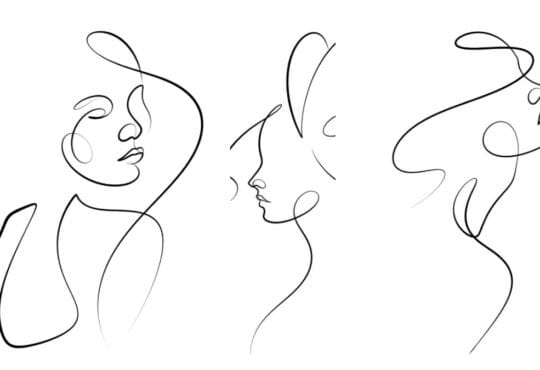
There are no rules and no right or incorrect. It is important to simply enjoy making marks on the paper. Grab your favorite pencil or pen and let your hands move as they please. Draw flowing, continuous lines that do not lift off the paper. You can create random squiggles or loops by crossing them over one another. Concentrate on the rhythm and spontaneous patterns that appear. This exercise can help you loosen your hand and build confidence. It is also a great way to relax.
Pro tip: Try it with different colored pens and see how the colors interact in your abstract composition.
13. Easy Eye Sketch

Drawing a simple, easy-to-draw eye is an excellent first step in drawing faces. Start by drawing an almond shape. This is the outer border of the eye. Draw a larger, darker circle inside the almond to represent the iris. Draw a dark, smaller circle within the iris to represent the pupil. Draw a gentle, simple curve above the almond-shaped shape for the upper lid. Add a few short, curvy lines to the upper and lower eyelids. Keep them sparse, for a beginner’s approach.
Pro tip: Add an unshaded, tiny circle or dot to the pupil. This will make the eye look more lively.
14. Happy Little Ghost

The goal of this easy drawing idea, is to create a friendly floating character. Start by drawing a slightly elongated, irregular shape. It should be wavy and wider at the top, then taper down to a flowing, wavy bottom. Imagine a bedsheet fluttering in the breeze. Add two circles or dots as eyes, and either a wide upward curve or a clear U-shape for the ghost’s smile. Add a few small dotted lines to the base of your ghost’s face to make it appear floating.
Pro tip: Change the mouth shape or add a tongue to your ghost’s face!
15. Simple Mountain Landscape

The final image on our list is an mountainscape that teaches layering and perspective. Start by drawing large irregular triangles, or jagged peaks on the upper portion of your paper to represent distant mountains. Do not make them too pointed; instead, think of weathered and natural peaks. Draw a few smaller triangles in front of the larger ones to create a sense depth. Draw a line straight or slightly wavy across the middle to separate the mountains and the ground. Add a circle to represent the sun or the moon in the sky.
Pro tip: Add subtle vertical or jagged lines to the mountains in order to suggest rocky textures and snow caps.
Bonus: Improve Your Drawing Skill as a Beginner
What now? You’ve already tried some simple drawing ideas for beginners. Here are some simple tips that will help you improve:
Practice regularly – even 10 minutes per day: The best tip. It is better to draw a little every day than a lot at once. This keeps your hands steady and your brain creative.
Use photos and prompts on Pinterest. Don’t think about everything yourself. Pinterest is a great place to find beginner sketches and pictures of objects to draw. Select photos that are clear and not too busy.
Take part in beginner drawing challenges and sketchbook prompts. There are many online groups that offer daily or weekly drawing suggestions. These groups can encourage you to experiment and inspire you.
You shouldn’t worry about imperfection. Keep experimenting. It’s normal that your first sketches won’t look perfect. You can learn from every “mistake”. Even if it feels strange, try new things. You will learn more and develop your own style the more you experiment. Have fun!
FAQs (Frequently Asked Questions)
When you first start to draw, it’s common for you to have some questions. These are the most common questions beginners ask:
What is the easiest drawing for beginners to do?
Beginners can start with basic shapes such as circles, squares and triangles. Then you can combine them to create simple cartoons, such as a smiling sun or everyday objects like a cup and a leaf. Focus on simple outlines, without a lot of detail.
What can I do to improve my drawing abilities if I am not very good?
Everybody starts somewhere! To improve:
Draw often.
Start with the basics: First, practice lines and shapes.
Sketch what you see.
Use photos: Reference photographs are an excellent help.
Be patient: Getting better takes time. Celebrate each small step.
Do I have to attend a drawing class before I can start to draw?
You don’t have to take a class. You can find a lot of resources for free online, such as YouTube tutorials and art blogs like this one. There are many free resources online, including art blogs (like this one! You can start by learning on your own. Classes may be useful later.
What should a beginning artist use as tools?
Start simple:
Pencils A 2B graphite and an HB pencil is perfect.
Eraser : Use a good plastic eraser or a kneaded one for gentle corrections.
Paper You can use any paper, including printer paper. A basic sketchpad will be useful later.
Optional A ruler to draw straight lines. (But practice drawing freehand as well! If you’d like to color your easy drawings, colored pencils are a good option.
The conclusion of the article is:
15 easy drawing ideas are now available to you, along with many tips and tricks that will help you get started. Drawing is an enjoyable and rewarding hobby. It helps you to express yourself. It is important to draw frequently, start simple and keep it simple. Each line you draw will help you to improve and enjoy the process.
Do not let the thought of drawing “perfectly” stop you. It is an adventure of exploration and learning. Grab your pencil and start sketching today. You may be surprised by what you can do with just a couple of simple lines.
Share your drawings with us on Instagram or Pinterest! Share your drawings with us via Instagram or Pinterest. Enjoy your sketching and have fun! Your creative journey is just beginning.