How to Draw Realistic Pastel Flowers: A Beginner-Friendly Step-by-Step Tutorial
Are you fascinated by the exquisite beauty of a flowering garden? Learning the art of drawing realistic flowers will allow you to preserve that beautiful, fleeting beauty forever. Pastel art, with its unadulterated color and texture, is the best medium to create stunningly realistic floral pictures. In this easy-to-follow guide, we’ll take a deep dive into creating pastel floral drawings that appear real, focusing on natural colors as well as soft textures and exquisite details. If you’re an absolute beginner or seeking to perfect your techniques, you’ll learn the most essential techniques, materials, and a straightforward step-by-step method to create your own stunning realistic pastel flower art.

Why Choose Pastels for Realistic Flower Art?
Pastel is a distinct medium that is able to be used in both the art of drawing as well as painting. Contrary to watercolors and pencils, they are pure pigments that have a binder that allows the creation of vivid, vibrant color that never fades.
When people discuss pastels, they’re typically talking about two types:
- Soft Pastels: These are chalk-like, soft, and heavily colored. They’re incredibly simple to mix and layer, which makes them the ideal option for creating soft, delicate designs, in addition to the real pastel flower designs you’re looking for.
- Oil Pastels: These have an oil binder or wax that gives them a dense, crayon-like consistency. Although they are able to be realistic, they’re harder to blend and are generally more suited to larger, more bold and textural designs.
Benefits of Using Pastels for Realism
Pastels are a wonderful way to achieve realism, especially when it comes to floral subjects, because of a variety of factors:
- Blendability: The soft pastels are able to be blended seamlessly using cotton swabs or fingers or mixing stumps to create natural gradients and smooth transitions that perfectly replicate the soft contours and shadows of petals.
- Texture: The graininess of pastels, particularly when they are applied to paper with a texture, creates a beautiful representation of the silky, delicate, or even rough texture of various flower petals and foliage.
- Color Depth: It allows you to easily overlay light colors over dark hues (unlike watercolor) and create amazing depth and richness, guaranteeing that your work has the true-to-life look and feel. In particular, the use of soft pastels can make petals appear extremely realistic and soft, taking in light in ways other dry media can’t.
Essential Materials You’ll Need
To create realistic pastel drawings with the correct tools is only half the fight. Don’t compromise on quality, particularly on the paper!
| Material | Why It’s Important for Realism |
| Soft Pastels | Offer the most intense color in terms of blendability, color intensity, and layering for fine small details. A high-quality set that has an adequate range of dark and light colors is vital. |
| High-Quality Textured Paper | Paper that has a “tooth” (texture), such as Canson Mi-Teintes and Pastelmat, is able to hold many layers of color. This is crucial for creating depth, color, and texture in your floral design. |
| Blending Tools | Cotton swabs, blending stumps (tortillons), and even your fingers permit you to gently blend colors without causing any damage to the paper. |
| Kneaded Eraser | Utilized to use for “lifting” color off the page to highlight areas or to correct a mistake without getting smudged. |
| Fixative Spray | A special spray that bonds the pastel dust with the paper. Essential to ensure preservation since pastel is a fragile and dusty medium. |
| Pastel Pencils (Optional) | It is great for drawing and adding fine details such as lines on the petals or edges that are sharp. |
Preparing Your Workspace and Reference Image
Before starting the stroke, a little planning can make a difference to real-world outcomes.
- Space for work: Ensure you have sufficient lighting (natural lighting is ideal) and a well-maintained surface. Pastel can be messy and can be messy. So, lay out newspapers. A slight slope (using the easel or drawing boards) lets dust be swept away, keeping your paints cleaner.
- Referencing Image: Quality of the reference image is crucial. Select a photo of a flower that has:
- Simple Composition: An easy, clear subject that is free of distractions.
- Color Variation: Look for flowers with subtle color changes. A rose petal, for instance, may be red towards the edges and pink towards the middle.
- Solid Lighting: The right lighting can create clear shadows and highlights that are essential for conveying 3D shape and depth.
- Additional Sketching: As much as possible, take a few minutes to sketch the actual bloom (or object) that you’re trying to draw. This allows you to better comprehend the object’s shape, texture, and the light-based interaction that will dramatically enhance the realism of your work.

Step-by-Step Guide to Drawing Realistic Pastel Flowers
Follow these steps to transform your blank sheet into a vivid flower-filled masterpiece.
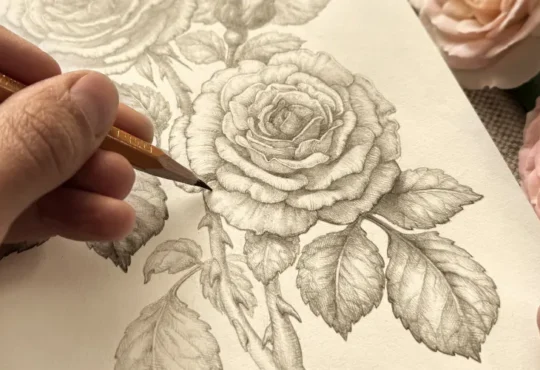
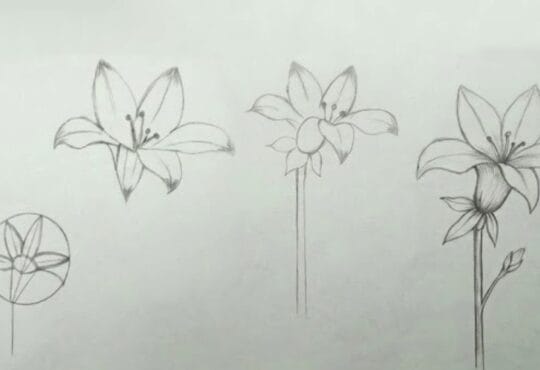
Step 1: Light Sketch of the Flower
Begin with the basics. Make use of the lighter pencil or a pastel pencil with an extremely light or neutral shade (like white or light grey).
- Pay attention to the primary form that the bloom has, the central alignment, and overall proportions.
- Draw out the biggest petal forms and the places where the stems will join.
Do not press too hard! The lines should not be visible so that they don’t appear through the pastel layers.
Step 2: Base Color Application
This is the first step in establishing the foundation and creates the mood for the whole piece.
- Apply the most pastel shades to create the primary hue of the petals and the general background color.
- Make sure your strokes are gentle, broad, and sluggish. The goal is to cover the paper and create the boundaries for future layers.
- Consider this image as “middle value”—not the brightest highlight nor the darkest shadow, but rather the primary color.
Step 3: Building Layers and Blending
Realism can be achieved through perseverance and layers.
- Layer gradually mid-tones before adding subtle highlights on the base color. Follow the curvature of the petals using your strokes, highlighting the natural shape of the flower.
- Blend slowly using an unclean cotton swab or the blending stump. The goal is to combine the shades to create an organic gradient and smooth transition, but be careful not to press so much that you break the paper’s “tooth” (which you need to make it easier for the next layer).
- Apply those darker shades (shadows) after mixing the mid-tones. This instantly creates depth.
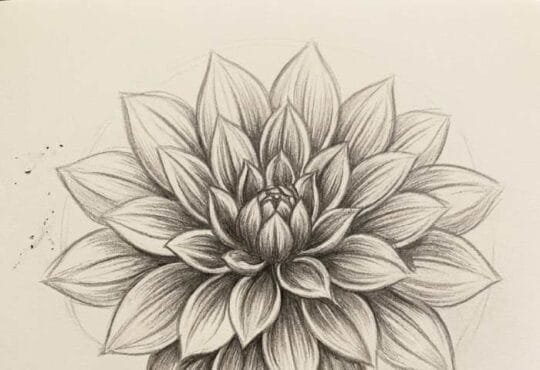
Step 4: Adding Realistic Details
Now let the flower come to life by precise tuning.
- Make use of a sharpened pastel stick or pastel pencil to create edges and veins as well as strong shadows. This makes flowers pop off the page.
- Create depth around the flower’s In the center, in the area where the petals meet and create shadows that are deep.
- Make small dabs of darker pastels to indicate the appearance of the stamen and pollen at the center.
Step 5: Final Touches and Fixing
This is the final stage, where you can enhance the contrast and keep your work.
- Highlights can be refined: Use a small piece of pure white or the lightest shade in your palette to make tiny, sharp points of light when the light is caught on the edges of a flower. This is essential to realistic results.
- Improve contrast: Darken shadows that are darkest for one final time.
- Fixative Spray: Bring the artwork into a clean, well-ventilated location and lightly apply an adhesive at the distance recommended. Applying the fixative too quickly or with too much could darken and alter the colors. Therefore, apply a light, even application. This step is vital to protect the artwork.
Common Mistakes Beginners Should Avoid
Making the effort to learn from mistakes made by others will help you avoid frustration and time.
- Blending too much (losing the texture): Blending is required, but if blend every layer entirely, the artwork will appear smooth and shiny. Let some strokes remain unblended, particularly on the last layer, to keep an unfinished texture, which suggests realness.
- Applying too much pressure Too Soon: If your first base layer is sprayed too thickly and pressed too hard, you’ll clog your sheet’s “tooth” and won’t be in a position to apply the required details and highlights. Be sure to keep your initial layers lightweight!
- Skipping Layering or Base Sketch: Rushing into color without a clear plan or making the final color with one large layer results in blurred forms and absence of depth. Layering is the key to creating vibrant, real color.
- Choose poor paper quality: Using smooth paper (like copier paper) can severely restrict your ability to blend and layer and create realistic results. Always use paper designed for pastels.
Bonus Tips for Realistic Results
- Watch Real Flowers Closely: Note the subtle hue variations, the blue undertones of white petals, or the yellow central of a pink rose. The art of seeing the things others don’t see.
- Utilize Contrasting Tone to add depth: Place warm colors (yellow and red) alongside cool shades (blue, purple, and grey) to help the subject jump ahead.
- Practice Blending Light-to Dark: Always apply your darkest colors first. Then apply lighter shades over them. This prevents your light shades from getting instantly muddy.
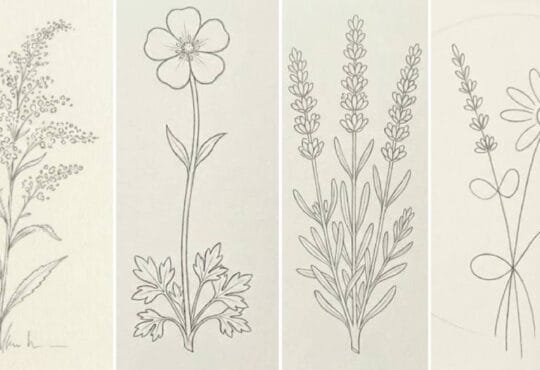
- Explore Drawing Different Flowers: The roses, the tulips, and the lilies each have their own unique structure. The practice of different kinds will help you master different textures (velvet in the case of roses and silkiness for the lilies).
How to Display or Preserve Your Pastel Flower Art
After you’ve perfected the art, it is important to safeguard it. Pastel is an extremely fragile medium.
- Why using a fixative Spray is Important: A light coat of fixative glues dust on the surface, stopping it from smudging, and keeps the artwork vivid for the duration of the artwork.
- Frame Tips to Pastel Art: Always frame your pastel drawings in the glass and make use of the matboard, which creates a space between the glass and the drawing. This makes sure that any dust from the pastel will fall onto the mat, not adhering to the glass.
- How to store your finished pastel illustrations: When your drawings are not framed, place your artwork flat using an unframed sheet or glassine (a non-stick, non-static paper) laid lightly over the completed drawing. Do not use ordinary tissue paper or plastic wrap that can cause the pastel to fall away from your paper.
Conclusion
You have now a full knowledge of the supplies, methods, techniques, and steps needed to learn drawing authentic pastel floral designs. The appeal of pastels lies in their realism and speed, which allows you to capture the garden’s essence using a few strokes and careful blending.
The path to realism requires time, yet every stroke is an improvement. Take your basic tools, select your favorite flower, and start building!
We recommend that you keep practicing regularly and to be sure to share your pastel flower artwork across the globe. What flower do you want to sketch first? Tell us via the comment section below. Or join us on Instagram for more tutorials and helpful tips!
FAQ
Q: What kind of pastels work the best for novices?
The soft pastels are the ideal option. Find “student grade” soft pastels from trusted brands such as Sennelier and Schmincke to begin. They provide high-quality pigments and superb blendability, without the cost of professional sets.
Q: What can you make the pastel flower appear more real?
The focus should be upon accentuation and layering. Make use of very dark colors in the shadows and pure light colors for the highlights. Make 5-7 thin layers of color instead of one large layer in order to get the depth of a real-looking dimension.
Q: Do be mixed with pastels other media such as the watercolor pencil or sharpener?
Yes! It’s an excellent method of adding detail. You can use watercolor for a light underpainting (let it completely dry!) prior to applying the pastels. Pastel pencils They are also great for bringing out the final sharp details, such as veins or sharp edges, that soft pastels aren’t able to make. They also are great for creating sharp, detailed details such as veins and edges that are soft.