10 Inspiring Still Life Drawing Ideas You Can Try at Home
You can unleash your inner artist at home. Still Life Drawing can help you improve your drawing skills and sharpen your observations. You don’t even need a studio to do this. still-life drawing ideas are a great way to explore your creativity, whether you’re an experienced artist or just getting started. This article will explore 10 still-life drawing ideas that you can use at home. We’ll also provide still-life sketching ideas as well as beginner drawing prompts. Explore 10 creative ideas that you can begin with today.
1. Everyday Kitchen Objects

Kitchens are the heart of any home and they offer a wealth of still-life drawing subject matter. Everyday kitchen items, from the humble apple to the gleaming teepot, are more than just useful. They’re also a goldmine for artists.
Considerations for
Fresh fruit in a bowl (apples oranges and bananas).
Different cups and mugs. (ceramics, glass, metal).
Kitchen utensils: (spoons and whisks, etc.)
Teapots or kettles
Bottles of vinegar, oil or spices
Why these items work: They are accessible and have a variety of textures, shapes and reflective surfaces. You will be challenged differently when drawing a smooth ceramic cup than you would a paper bag with crinkles or a metal spoon that is shiny. These are great for learning basic skills such as ellipses and perspective. They also help you understand how light interacts differently with different materials.
Tip : Try different arrangements. Try stacking the cups, placing one fruit in a large bowl or arranging small clusters of utensils. Be sure to pay attention to the way natural light illuminates your set-up. Soft, diffused lighting can create beautiful shadows and highlights.
2. Combo of Books and Glasses

This classic pair offers an excellent opportunity to explore geometric shapes, linear perspective and the interplay between transparency and solidity. The juxtaposition of the fragile structure of glasses and stacked books creates a compelling visual story.
Considerations for
Your favorite books in different sizes and colors.
You can wear sunglasses or reading glasses
A book open with a bookmark
You might also want to keep a pen and a small cup handy
Benefits for artists: Drawing Books help you to practice rendering rectangular shapes in perspective. Pay attention to the spine of the book, how it stacks, and other details. With their thin frames and transparent lenses, glasses are perfect for studying negative space, reflections and refractions. Both objects cast intricate shadows that are fascinating to capture. This set-up is ideal for practicing your still-life composition ideas as the arrangement can dramatically change the visual flow of the drawing.
3. Flower Vase Arrangements

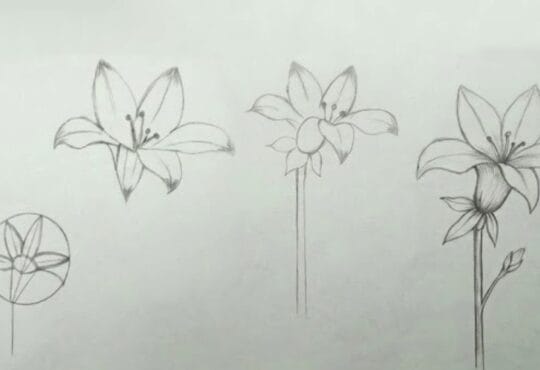
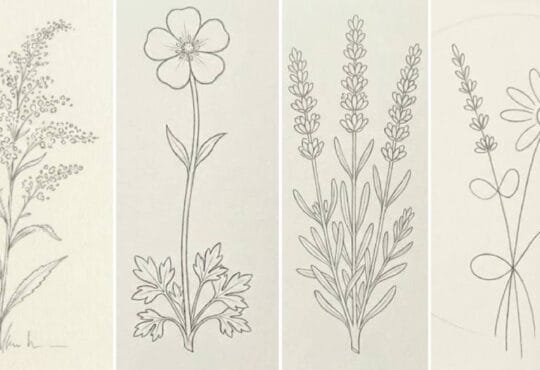
A flower vase arrangement brings the beauty of nature inside. It is an elegant still-life drawing topic. Choose real or lifelike artificial flowers. The organic shapes and vibrant colors will make this a fun challenge.
Considerations for
Fresh flowers in a vase
Potted plants
Artificial flowers in a decorative vessel
Around the base, you may find fallen petals or leaves
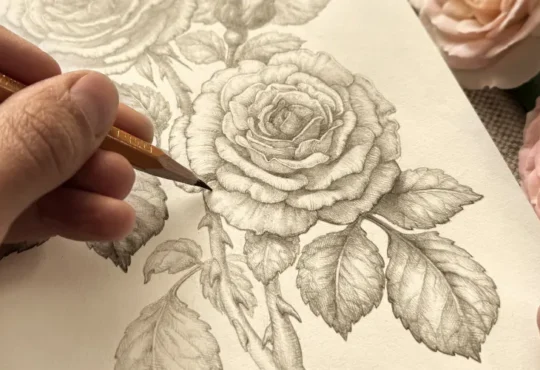
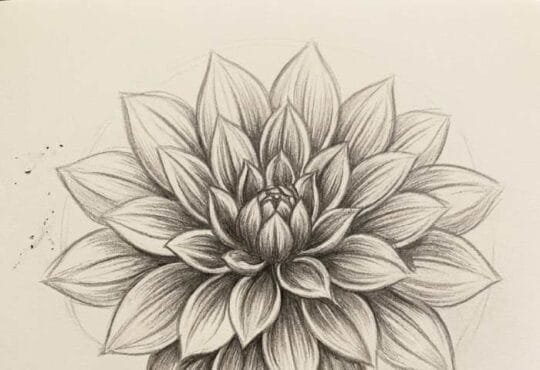
Focus on artistic expression: Flowers are about organic shapes, delicate curves and intricate details. You will be encouraged to relax your hand and focus on fluid, flowing lines. They also help you understand the effect of light on leaves and petals. The vase provides a great opportunity to practice reflections and symmetry. Think about the overall shape – is the arrangement symmetrical or asymmetrical? Does it have a focal point that dominates the design?
4. Fruits and Vegetables Display

A vibrant collection of fruits, vegetables, and flowers has been a favorite of artists for centuries. It offers an explosion in colors, textures, shapes, and patterns. This is a great way to learn how to render organic produce realistically and capture its essence.
Considerations for
Apples (smooth, round)
Bananas (curved, textured skin)
Onions and garlic
Bell Peppers (smoothed, glossy, angular).
Lemons and oranges with distinct shapes (textured peel)
Visual appeal This category has a wide range of options. Each item, from the slick sheen of the apple to the bumpy orange skin, presents an artistic challenge. They are excellent for practicing values and shading to create a sense of three-dimensionality, understanding contours, and building up rich textures. Natural variations in form and color create dynamic compositions that are perfect for improving your still life food sketch abilities.
5. Tech and Modern Items

In our digitally-driven world, adding technology to your still-life drawing will give it a modern edge. These items feature sleek lines, reflecting screens, and distinctive geometric shapes.
Considerations for
Your smartphone or tablet
Headphones
Laptop or keyboard
Computer mouse
A camera
Gives it a modern twist: Drawing gadgets of today can be rewarding. You will be challenged to capture the precise lines and shiny surfaces of modern gadgets, as well as the complex interaction between light and screens, polished metal or plastic. This category is great for targeting keywords such as modern still-life drawing ideas, and adding a unique twist to traditional still life sketching ideas. Consider how screens reflect light or the difference in texture between a mouse and a keyboard.
6. Candles and Lamps

Candles and lamps capture the ethereal qualities of light and shade. This is a great way to explore dramatic contrasts as well as warm, inviting glows.
Considerations for
Candles (pillars, tapers, tealights)
Small desk lamps or bedside lamps
Candle Holders or Lanterns
There may be a nearby reflective surface
Focus on the arts: Here’s your chance to explore light and shadows in depth. Watch how the flickering flame of a lamp creates subtle tones. Be aware of the reflected light from nearby surfaces, and how light spills out from a lamp shade. Draw the same scene at different times during the day, or with different lighting sources to observe how moods and visual information can change. This is a great way to learn about value, atmosphere and how light appears in your drawings.
7. Tool or DIY Items

A collection of DIY tools or everyday items can be a great still-life drawing topic for those who enjoy the utilitarian beauty. These objects are often characterized by robust shapes, distinctive textures, and interesting materials properties.
Considerations for
Hammer and nails
Wrenches and pliers
Tape measure or spirit level
Screwdrivers and nuts and bolts
Paintbrushes and paint tubes
Good For: You can use this category to practice rendering metallic surfaces and intricate mechanical parts. You will learn how to distinguish between the rough texture on a wooden handle and the smooth shine of metal. Tools are characterized by their strong geometric shapes and industrial aesthetic. This is a departure from more organic, softer subjects.
8. Food on a plate

Food on a plate is more than just ingredients. It tells a tale and presents unique challenges for composition, texture and color. This is an opportunity to draw anything from a simple dessert to a complex sandwich.
Considerations for
Breakfast: Toast, eggs, coffee cup
Sandwich with chips
One slice of cake
A bowl of soup and a spoon
Helpful for: Drawing a food plate will help you to focus on proportions. You can see how food is arranged on the plate and how it relates to its surface. You will also learn to draw a variety of textures, such as fluffy bread, crisp lettuce and smooth icing, while capturing the appealing quality of each ingredient. A meal’s contrast of colors and values can be used to create an engaging still life drawing.
9. Personal Mementos or Jewelry

Select items with sentimental value to add personal meaning to your Still Life Drawing. These objects can bring back memories and create a narrative that will enhance your drawing.
Considerations for
Your favorite watch or ring
You can use an old key or locket
A unique souvenir from a trip
A miniature figurine to cherish
An antique coin or a favorite pen
Tells a story: By drawing personal mementos, you can connect to your subject at a deeper level. Each scratch, dent or worn surface has a story. They often contain intricate details that require close observation and accuracy. These items can encourage an emotional attachment to the subject. This can lead to more expressive and heartfelt art. It is important to capture the physical form of the object, as well as a hint at its history or sentiment.
10 Lighting Setup

Natural light: Most popular option for drawing still lifes at home. Place your setup close to a window, but away from direct sunlight. Windows facing north provide soft, consistent light all day long. Watch how light creates shadows, highlights and mid-tones.
Artificial Lighting (Lamp) : Use a single lamp if you don’t have natural lighting or want to be able to control the light. Position the lamp to one side to define shapes and create sharp shadows. Avoid using multiple light sources as they may create overlapping shadows. Try experimenting with the distance and height of the lamp.
Use a Cloth or Background: A simple piece of cloth (such as a tablecloth, bedsheet or large sheet of paper) draped on a box or chair can create an uncluttered, uniform background. It helps eliminate distracting elements, and focuses attention on the subject. Textured fabrics can be used to add visual interest while smoother ones can highlight the object itself.
Positioning to Create Interesting Compositions:
Do not place everything on the same height. To create a visual hierarchy, use books, boxes or smaller pedestals.
Overlap Items: By overlapping items, you can create a realistic and 3D effect. Avoid placing objects in straight lines or evenly spaced.
Negative Space is important: The space between and of your objects, as well as the objects themselves. These empty spaces can create interesting shapes.
Rule Of Thirds: Divide your “canvas”, mentally, into a grid of 3×3. Place your focal points on the lines or intersections to create a dynamic composition.
Keep It Simple: Don’t overburden yourself, especially when you are just starting out. Few carefully chosen items can create a drawing that is more powerful.
The conclusion of the article is:
still-life drawing, as we have seen, is extremely flexible and fun. It’s also perfect for artists at all levels who want to practice in the comfort of their homes. Everyday objects can be a great source of inspiration. This is a great way to improve your observational skills, understand light and shadow and refine your drawing technique.
Enjoy the process of creation and experiment with these Still Life Drawing Ideas. Do not be afraid to experiment with new angles, lighting and media. Create a daily sketchbook practice. Even a 10-minute sketch can make a huge difference.
It’s now your turn! What still-life drawing ideas do you want to try first? Share your favorite ideas in the comments section below or better yet, send us your drawings! Enjoy your sketching!
FAQs
Which are the best items for drawing still life at home? Those that are readily available to you and that you find interesting! Fruits, kitchen utensils and glasses are all excellent items to use because they provide a variety in terms of textures and shapes. Begin with simple items and work your way to more complex arrangements.
Why do artists draw still life? Drawing a still life has many purposes. It improves observation skills by allowing you see and render fine details, values and forms. It is a great way to practice composition, understand light and shadow, master perspective, and refine your technical drawing skills. It strengthens the foundational skills that are applicable to any form of art.
What makes a still-life interesting? Focus on composition. Consider the negative space, changing the size and height of the objects. Try dramatic lighting effects to create contrasts and strong shadows. Add a personal touch to your drawing by adding a story or a connection.
Recommended Products
You don’t require much to get started on your still-life sketching ideas. Here are a few essential supplies:
Sketchbooks Choose acid-free papers that can handle graphite in multiple layers without tearing. The different sizes of paper allow for different scales to be drawn.
Pencils A set of graphite (e.g. HB, 2B, 4B, 6B ) pencils will provide you with a variety of hardnesses and darkenings for shading and lining work.
Erasers A kneaded eraser (for lifting graphite or soft erasing), and a vinyl eraser (for clean, precise erasing), are both indispensable.
Blending Tortillons/Stumps: These tools blend graphite for seamless shading.
Drawing Board/Clipboard: If you are not drawing on a desk, then provide a solid surface.