The Rise of Portable Watercolour: How Artists Are Moving Beyond the Studio
For a long time, serious art was tied to a fixed studio. Good lighting, large tables, storage racks and permanent setups were seen as essential. Today, that idea is quietly fading. Across cities and public spaces, artists are creating professional watercolour work wherever they happen to be, without waiting to return to a studio.
You now see artists painting in cafés, parks, trains and waiting areas, producing finished pieces rather than rough sketches. This shift is not about cutting corners, it’s about freedom, flexibility and using time differently.
Letting go of the studio rule
Watercolour has always had a portable side, but it was often treated as a secondary medium. Many artists believed real work happened later, back in the studio, using oils or acrylics.
But things are changing. Improvements in materials and changing creative habits mean artists no longer need a fixed workspace to produce high-quality results. For many, a compact watercolour kit has replaced the studio altogether. Instead of separating “serious work” from everyday life, artists are blending the two. You paint when inspiration appears, not when you reach a specific room.
Quality without compromise
In the past, portable kits came with clear limitations. The paints were weak, the paper was thin and the brushes were unreliable. Portability usually meant sacrificing quality.
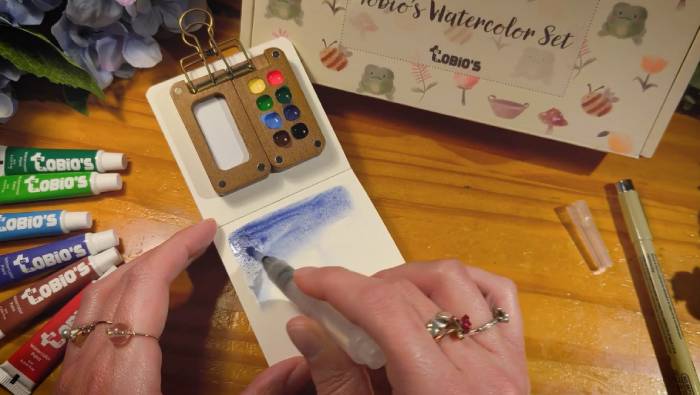
That balance has shifted. Modern portable watercolour kits are designed for professionals too, not just students or hobbyists. You now get artist-grade pigments, proper watercolour paper and well-designed palettes in compact formats.
Water-reservoir brushes reduce setup time, while sturdy cases protect both materials and finished work. This makes it practical to paint during short breaks, commutes or travel without lowering your standards.
Why painting on location changes the work
Painting outside the studio is not only convenient, but it can also affect how you work. When you paint from life, you respond to movement, sound, weather and changing light. These elements bring an immediacy that photographs often cannot capture.
This applies beyond landscapes. Artists paint commuters, public spaces and everyday scenes as they unfold. Instead of recreating moments later, you respond to them in real time. That shared moment between you and the subject often gives the work a stronger sense of presence. Many artists find that this approach leads to more honest and expressive results.
Tools that make it possible
Portable watercolour became a serious option because the tools used have improved. Key developments include:
- High-pigment, lightfast paints in compact pans
- Proper 300 gsm watercolour paper that resists warping
- Reliable water-reservoir brushes that hold enough water
- Palettes with sufficient space for colour mixing
- Durable cases that protect supplies while travelling
These changes have elevated portable watercolour from a convenience to more of a professional practice.
Making creativity easier to maintain
Platforms like tobioskits.com reflect this move towards practical and everyday creativity. The site offers a range of engaging art kits designed to be used regularly rather than left unused on a shelf. Each kit is thoughtfully curated to make painting approachable and enjoyable, whether you are working at home or on the move.
Alongside its best-selling kits, the platform features customer reviews, seasonal collections such as its winter range, and a clear brand story explaining the ideas behind its products. FAQs and guidance make it accessible for beginners, hobbyists and families who want art to feel achievable rather than intimidating. This kind of approach supports the idea that creativity works best when it fits easily into daily routines.
The influence of social media
Social media has played a major role in normalising portable watercolour. Artists regularly share finished work created in public spaces, challenging the idea that location-based painting is only for practice.
Seeing others paint confidently outside studios encourages more artists to try it themselves. Over time, this has grown into a global community sharing techniques, locations and creative processes. For many younger artists, there is no longer a clear divide between studio work and on-the-go work.
Turning commute time into art time
One of the most interesting developments is the rise of the commuter artist. Instead of treating travel time as waste time, artists use it for focused creative work.
Even short daily commutes add up over months. Watercolour suits this perfectly. It is quiet, compact and easy to manage in shared spaces. You can paint, pack up quickly and continue your day without disruption. For artists balancing work, family and creative goals, this approach makes consistency much easier.
Breaking old perceptions
Watercolour was once seen as less prestigious than other painting media. Its portability often reinforced the idea that if it was meant for sketches rather than finished pieces.
That perception is fading. Galleries and collectors increasingly recognise watercolour as a complete medium. Prices have risen, exhibitions are more common, and the medium is being judged on the strength of the work rather than outdated assumptions. The fact that a piece was created on location often adds to its appeal, especially when place and timing matter to the artwork.
A practical and sustainable choice
Portable watercolour also makes sense from a practical point of view. You don’t need studio rent, setup time is minimal and materials are affordable. Watercolour is also one of the more environmentally friendly painting methods, using water-based cleanup and fewer harmful materials. For artists working in expensive cities or limited spaces, this accessibility matters.
A flexible way forward
Most artists don’t abandon studios altogether. Instead, they adopt hybrid practices. Studio time is used for certain projects, while portable watercolour supports daily practice, travel work and location-based series. Digital tools often sit alongside this and help artists to document their work, share it online or prepare it for prints and exhibitions.
Creativity without boundaries
Portable watercolour reflects wider changes in how people live and work. Flexibility, mobility and authenticity matter more than ever. Art no longer needs to be tied to a single space to be taken seriously.
When you can paint wherever you are, creativity becomes part of daily life rather than something postponed. With the right tools and mindset, serious art can happen almost anywhere.