How to Draw a Cat in Different Art Styles (Realism, Minimalist, Anime, etc.)
Cats. These mysterious graceful, elegant, and frequently comically quirky animals have captured our hearts (and laps) for centuries. Their fluid movement, expressive eyes and uncompromising character make them stimulating art subject for artists. If you’re an experienced illustrator or you’re just getting pencils for the first time the process of learning the art of drawing the cat can open up a whole new world of imaginative possibilities.
Why restrict yourself to one method of portraying these felines? Learning about and exploring various art forms will not only help you improve your technical capabilities, but enable you to convey the distinctive personality and essence of the subject matter in various and interesting ways.
In this thorough guide, we’ll go on a journey of creativity to learn the art of drawing cats in various art styles including the complicated details of realism to the sweet simplicity that is minimalist, to the boldness that anime offers, fun cartoon’s exaggeration, and the endless possibilities to create abstract art. When you’re done with this article you’ll have a thorough understanding of each style, but you’ll also have the confidence to create your unique cat’s vision to life.
Fundamental Cat Anatomy is the Base for Any Style
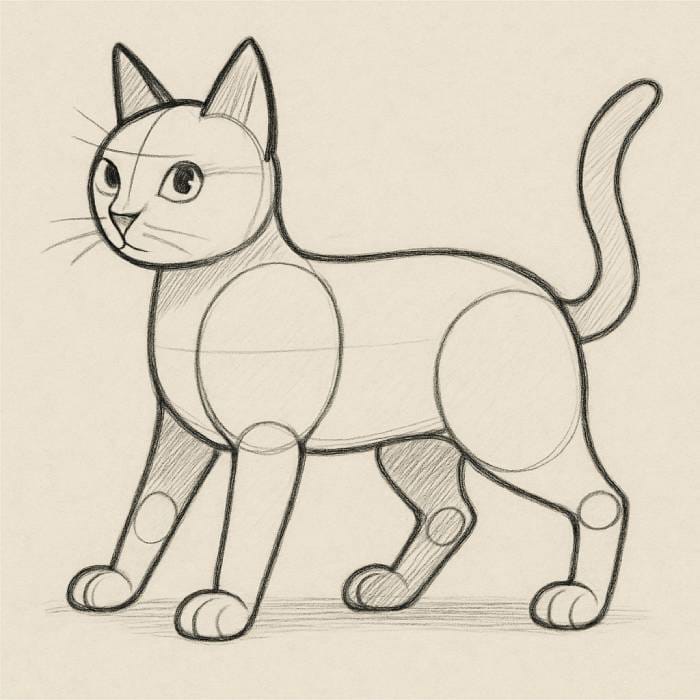
Before we get into particular styles, it is essential to comprehend the basic components of a cat’s shape. As a home needs solid foundations, every good drawing of a cat, no matter what design, is based on an understanding of the anatomy of cats and their proportions.
The body of a cat can be cut into fairly simple forms. The head is typically round and has distinctive triangular ears that are positioned over. The body is long and supple, comprising the ribcage as well as a pelvic region joined to a spine that is supple. The tail, an essential element of their posture and balance, can differ in its length and width. In addition their paws are distinguished by soft pads as well as retractable claws.
The observation of real cats or top-quality images of reference is essential to understanding the relationship between these proportions and the ways they move. Take note of how the limbs join and the human body. Pay attention also to the curvature of their backs, as well as the subtle changes in their body posture when they walk, stretch or take an afternoon nap.
Tips: Before jumping into the specifics of a particular style, try sketching a basic outline of the cat. Utilize simple geometric shapes such as the oval and circles to depict the head, body and legs. This sketch will serve as a reference, ensuring that your cat’s stylized image retains the same recognizable characteristics of the real-life cat.
Style 1 How to draw a realistic cat
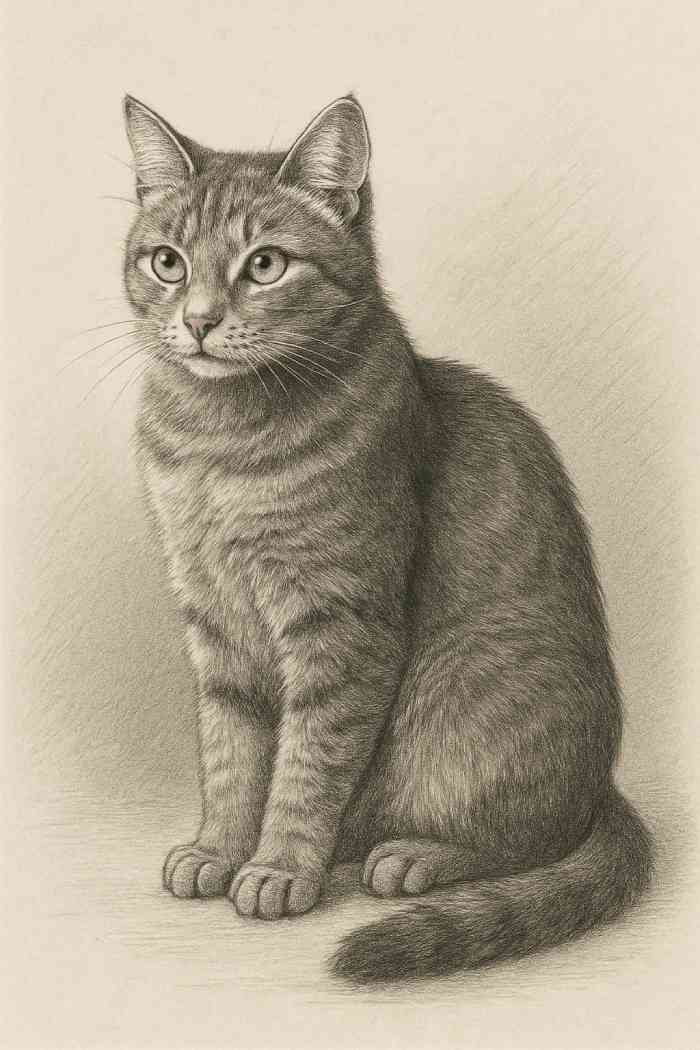
If you are a fan of the finer details and desire realistic depiction, drawing a realistic cat is an enjoyable challenge. This style is centered around accurately depicting the cat’s shape as well as fur texture as well as the interaction of shadow and light.
Step-by-Step Guide:
Start with a gentle sketch: Utilize your fundamental anatomical knowledge to sketch the overall appearance of the cat, paying close attention to proportions and posture.
Shapes can be refined: Gradually refine the initial shapes by adding details like the contours of your head, the contour of the ears as well as the movement through the human body.
Pay attention to Fur: Be aware of how long and the direction the fur is. Utilize shorter, overlapping strokes to build the texture. You can also vary how much pressure you apply to your pencil in order to make darker and lighter areas.
Add highlights and shadows: Observe your reference photograph carefully to see the places where light reflects and where shadows cast. Utilize shading techniques such as cross-hatching, hatching or blending to add the illusion of depth and depth. Be aware of subtle shadows that surround the eyes, nose and mouth, and the highlights of the fur.
Specifics are important: Add details like the shape and colour of eyes (remember that pupils are usually vertical slits) and the tiny features of the nose and mouth, as well as individual fur strands.
Blend and refine: Take a step back and review your drawing. Make any areas that require adjustments and then employ blending stumps or tortillons to smooth out transitions within your shading.
Tools to Use: A range of graphite pencils (from hard to soft) and erasers (kneaded and regular) along with blending stumps is necessary to achieve the subtle changes in texture and tone in the realistic cat drawing.
Images for Reference: For drawing in a realistic way high-quality reference images are your most reliable source. They can provide vital information on anatomy, fur patterns and lighting.
Style 2. How to draw a minimal cat
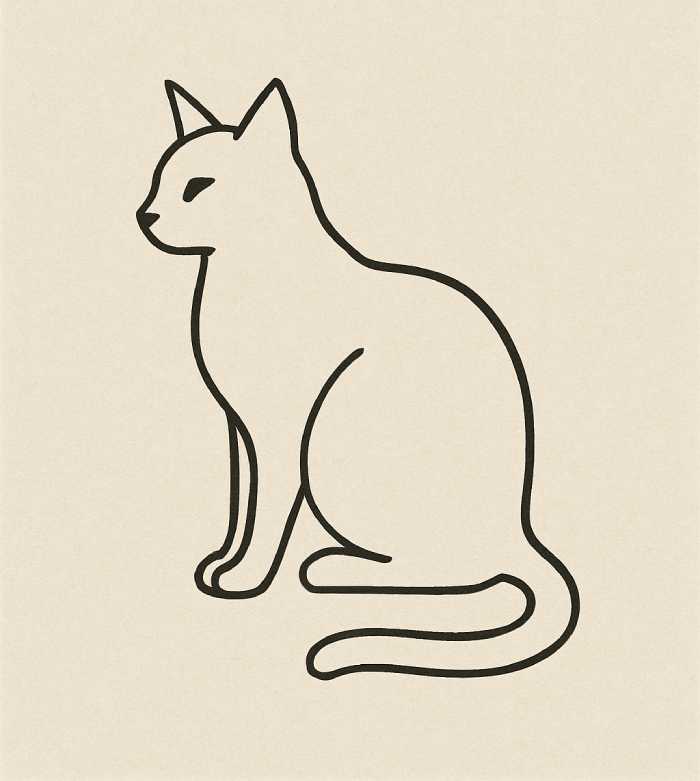
In contrast to the realism of art, minimalist art is characterized by simplicity and basic shapes. The minimalist drawing of a cat seeks to capture the essence of the feline by using the smallest lines and details that are possible.
What is minimalism? It’s characterized by clear and confident lines with a strong concentration on negative space and the deliberate elimination of unneeded elements. The objective is to bring out the subject in the most effective way with minimal effort.
Guide: Using clean, confident lines:
Identify the essential essence: Think about the most well-known aspects of the cat’s shape like an arched rear, pointed ears, and the graceful tail.
Draw your lines: Visualize how you can convey these essential capabilities with just a few lines.
Perform confidently: Use smooth, uninterrupted lines. Intentional pauses can result in shaky or unorganized results.
Concentrate on your outline: It is usually the most important element in a simple drawing. Be aware of the curvature and flow of lines.
Think about Negative space: Space surrounding your lines is as important as your lines themselves. It can affect the overall quality and effect of your drawing.
Optional information: You might choose to include a single, properly-placed line to represent eyes or the impression to mouth. However, make the line to a minimum.
Tools: Fineliner pens or digital drawing programs that have soft brush settings are ideal for drawing clean, sharp lines.
Ideal for: Cat drawings that are minimalist are ideal for logos or tattoos, artwork for home decor and designs that need an elegant and simple design.
Style 3 How to draw a Cat in an Anime Style
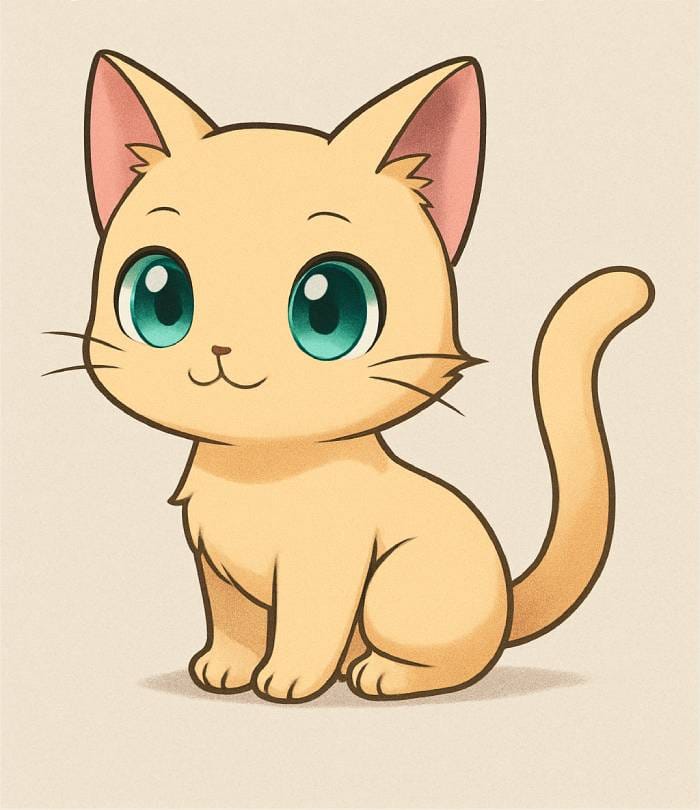
Anime, a distinctive Japanese manga and animation style is a delightful and expressive way of illustrating cats. Characteristics of anime cats include big expressive eyes as well as soft flowing lines, and an over-exaggerated sense of adorableness (kawaii).
Step-by-Step Breakdown:
The face and head: Start with a slightly larger head when compared to body. The eyes are usually big and oval or round and often have many highlights to create a sparkling effect. The mouth and nose are typically small and simple.
Body: Its body may vary from realistically proportioned to more than a chibi (small as well as cute) in accordance with the desired look. The lines are usually smooth and flowing.
Ears and tails: Ears are typically triangular, but they can also be more rounded. The tail is typically depicted as a soft and expressive, expressing emotion through its movements.
Eyes with expressive features: This is a feature of anime. Concentrate on creating irises that are large by adding layers of color and adding high-contrast highlights in order to provide the eye with a personality and depth.
Smooth lines, shading and soft: Use smooth, clear lines to outline. Shading is usually soft and cell-shaded. This is accompanied by distinct zones of shadow and light.
Colour tips: Animation cat pictures usually feature soft, inviting color palettes that have vibrant highlights within the eye. Do not be afraid to apply bright highlights to give your drawing an appearance of sparkle.
Style 4: Learn do you Draw the Character of a Cartoon Cat
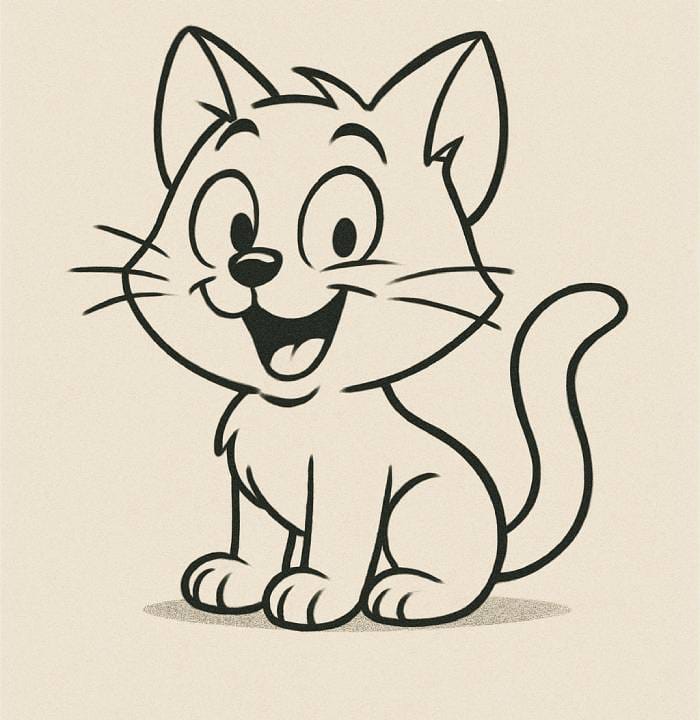
Cartoon cat illustrations are all about personality and exaggeration that is playful. This type of style gives you an abundance of artistic freedom in regards to shapes proportions, expressions, and shapes.
Differential traits: Cartoon cats often have exaggerated forms (e.g. large heads and tiny bodies) with bold lines, and extremely expressive faces.
Tips: Emphasize personality:
Exaggerate highlights: Don’t be afraid to experiment with proportions. Make your eyes bigger and round for a charming appearance, as well as give your pet a big smile that is playful and innocent.
Bold outline: Use thick, well-defined lines to help that cartoon’s cat stick out.
Expressions that are playful: Focus on conveying emotions through your eyes mouth, body, and language. Consider the kind of personality you would like your cartoon cat to display.
Make props available: Hats, glasses bow ties, even thought bubbles can contribute to the personality and storytelling capabilities for your cat in cartoon.
Excellent to use for Drawing cartoon cats is great for comics, books for children illustrations, designs, and other works with a playful and a lighthearted vibe.
Style 5 Articulating an Abstract Cat
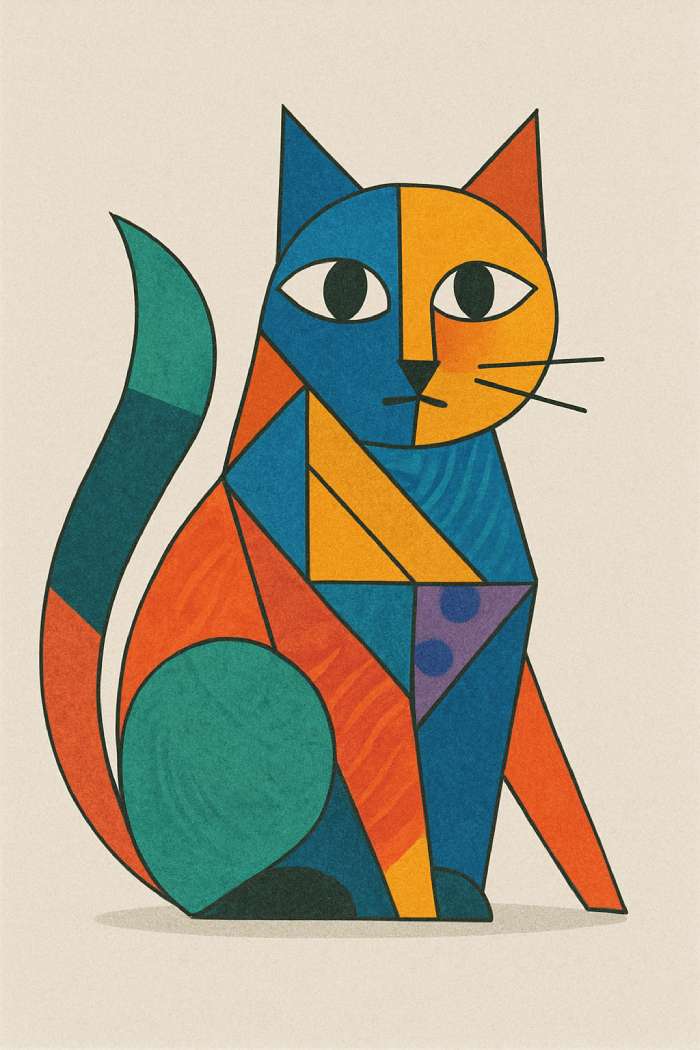
Abstract art for cats throws the traditional representations out of the window and is focused on conveying the essence or feel of a cat by using forms, colors, patterns and stylization.
Exploring the creative potential of people:
Geometric patterns: You might choose to depict a cat using just triangles, circles or squares. You can also use other geometric shapes.
Textures and patterns: Incorporate interesting patterns and textures that convey movement or fur without a literal representation.
Style: Deform or reduce the cats appearance in distinctive and original ways.
Color as an expression: Use colors to create emotion or to represent various elements of an animal’s temperament energy.
Illustrations from well-known abstract artist: Look at the work of artists such as Picasso or Kandinsky to get ideas on how to break them down and reinvent forms.
Inspiring exploration: There are no rules for abstract art! Try different materials, techniques and methods. Let your imagination guide you to discover the most amazing interpretations of the cat you can make.
Comparison Chart: The Key Traits of Every Style
This chart offers brief information on the main aspects of each art style that will help you appreciate the fundamental differences between them.
Bonus: Tips to Transition Between Styles
Learning how to draw cats in various styles isn’t only about mastering every one of them separately; it’s also about gaining the ability to switch between styles and even to create your own unique hybrid style.
How to modify one sketch: Consider taking an sketch of a cat’s basic design and imagine it in each of the various styles we’ve talked about. Consider how you’ll need to alter the lines, the details, and proportions of each.
Practices to create hybrid designs: Experiment by combining elements of different styles. For instance, you can draw realistic cats with the big, expressive eyes of anime or a minimalist cat with bold cartoon lines.
Promoting creativity: When you experiment with drawing in various designs, the more flexible and adaptable your talents will be. Don’t be afraid to try new things and find your distinctive voice.
Conclusion
The process of learning the art of drawing cats in various styles is a process of discovery and exploration. It does not just enhance your drawing skills but lets you interact to this animal through a variety of imaginative ways. From the intricate details of realism to simple elegance of minimalism the captivating appeal that anime offers, to the spirited animations and the endless potential of abstract art each style has its own lens to look at and understand the feline’s form.
We invite you to test each of the styles we’ve discussed as well as be willing explore and create your own unique methods. Make sure to share your artwork with fellow art lovers and continue to improve and learn along your path to artistic excellence. Art for cats is huge and full of endless possibilities!
FAQ
Is it the most simple cat art style that you can learn? Minimalist and cartoon styles are generally considered to be more suitable for novices since they concentrate on simpler forms and less details.
Do I have the ability to draw these designs digitally? Absolutely! Digital drawing tools provide many tools and brushes that are able to be applied to get the look of every design.