Creative Ways to Use Minimalist Art in Interior Design
Minimalist art is now an essential feature of modern interiors. Its clean lines, serene tones, and deliberate minimalistic design allow spaces to breathe. Instead of clogging the corners and walls with clutter, minimalist furniture creates focus and harmony. If they are used in a thoughtful manner, they can shape the way a space feels without overwhelming the space. This blog outlines the practical and innovative ways to employ minimalist art in interior design, including selection, placement, and color lighting, as well as common mistakes, to create rooms that are calm and refined.
Understanding Minimalist Art in Interior Spaces
Minimalist art is based on the simplicity of its design and its purpose. It stays clear of unnecessary detail and is focused on the form and space, along with subtle and delicate contrast. In interiors, this method is ideal since the homes already have furniture as well as textures and practical elements. Simple pieces complement these elements instead of being in competition with them.
Negative space plays a significant part. The empty spaces around the piece allow it to stand alone. This allows for a sense of rest that is often lacking in busy rooms. It creates a space that is calm, ordered, and purposeful. Minimalist art doesn’t demand attention in a loud manner. Instead, it invites quiet focus.
Choosing the Right Minimalist Art for Each Room
Each space serves a distinct function, and art must reflect that purpose.
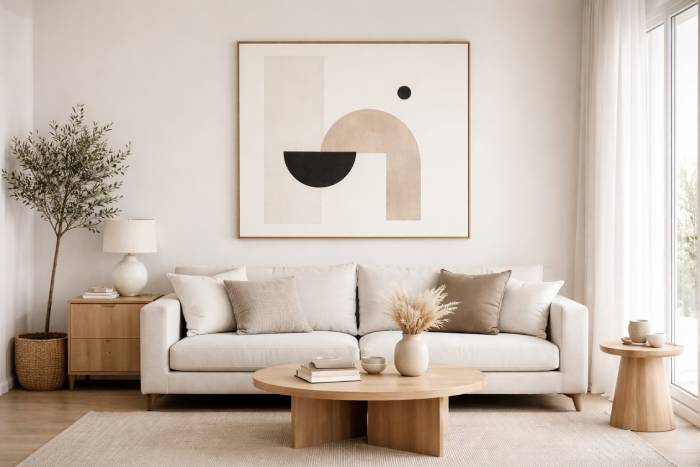
In living spaces, in living rooms, one piece is often more effective than a number of smaller pieces. It acts as an anchor for the eye without creating chaos. Abstract lines or neutral tones are an excellent choice for seating and spacious arrangements.
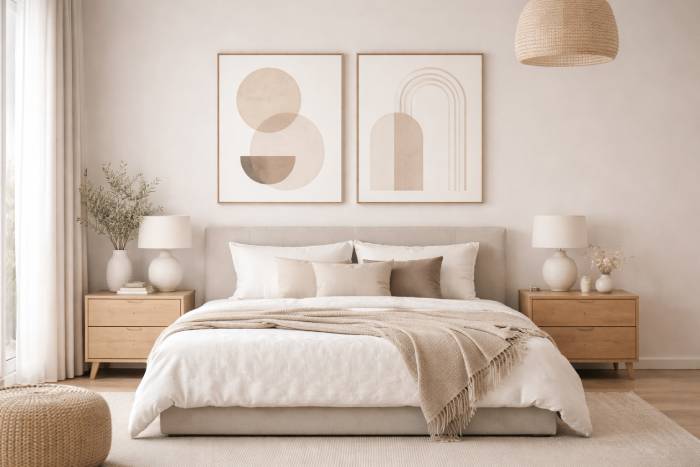
Bedrooms are a great place to relax with soft visuals. Subtle shapes, muted colors, or monochrome designs help create a restful mood. Avoid stark contrasts in this case because they could disrupt your relaxation.
Offices in the home require concentration. The minimalistic pieces that are structured with simple geometry can help maintain focus and avoid distraction. Be careful not to use too much expressive design that can draw attention away from your work.
Dining areas are best served by minimalist pieces that encourage conversations. Simple images placed close to the eye keep the area inviting and balanced.
Creative Placement Ideas for Minimalist Art
The placement of the piece is as important as the actual piece. A good option is to use one piece that is large enough to serve as the focal point. This is ideal for sofas, beds, and console tables.
Linear arrangements are also a good fit for minimalist interiors. A set of similar-sized items with ample space creates a harmonious flow without chaos. Make sure that frames are consistent in order to keep the unity.
Leaning the artwork against the wall instead of hanging it gives it an airy feel. This is especially effective in contemporary and Scandinavian interiors.
Unexpected places can create curiosity. Stair landings, hallways, and quiet corners usually remain unnoticed. A small piece of furniture within these spaces can add personality without much exertion.
Using Color and Texture Thoughtfully
The color choice determines the way minimalist pieces interact with an area. The monochrome palettes are harmonious and make interiors more cohesive. Beige, black, white and soft gray remain popular for a reason.
Subtle contrast adds depth. A darker accent placed on a wall with a light tone or an ethereal neutral on a smooth surface can create a quiet, visually interesting effect.
The texture of the canvas is essential even when the color palette is limited. Line drawings, canvas grain or natural materials give the dimension of an approach that is minimalist. Texture prevents the simplicity from appearing plain.
Pairing Minimalist Art with Furniture and Decor
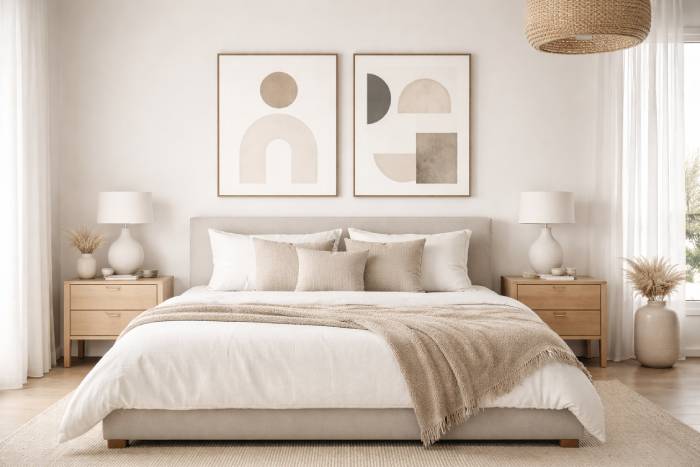
Balance of scale is vital. A tiny piece placed on a wall that is large can be challenging to see, whereas a large artwork in a small space could overwhelm. Make sure to match the dimensions of the artwork with adjacent furniture to achieve balance.
Let artwork guide decor choices. If an artwork has warm tones, reflect this warmth by using carpets, cushions and wood surfaces. Make sure that accessories are limited to ensure that the artwork is the central aspect of the piece.
The minimalist interior is best when each object is a necessity. Do not fill tables and shelves just to fill space.
Mixing Minimalist Art with Other Design Styles
Minimalist Art blends well with different styles. In contemporary interiors, it emphasizes clean lines and spacious spaces. It’s a feeling of being deliberate and clear.
Scandinavian interiors are harmonious with minimalist furniture. Natural materials, light colors and simple design provide warmth and comfort without being too extravagant.
In industrial settings, minimalist artwork softens the basic materials like metal and concrete. Pick simple designs that have a sturdy design to complement the surroundings.
Even rooms with rustic decor are a good candidate for minimalistic elements. A well-balanced piece can complement the heavier materials like stone and wood.
Lighting Techniques to Enhance Minimalist Art
The lighting affects how art is perceived. Natural light is best when it spreads evenly over the artwork without reflections or glare. The artwork should be placed in a place where sunlight enhances it, rather than scrubbing it away.
Accent lighting can add subtle accents. Lights that are mounted on the walls or soft spotlights attract attention but do not overpower the space.
Avoid harsh lighting. Bright shadows or strong contrast can disrupt the tranquility that minimalist interiors are designed to achieve.
Common Mistakes to Avoid
A common mistake is crowding walls. Modern minimalist interiors require room to function effectively. By adding too many items, you defeat the goal.
Another consideration is selecting artwork that doesn’t fit with the mood of the room. A striking, chaotic piece could disrupt the calm of a room.
Inadvertently ignoring scale and spacing results in an imbalance. Take measurements of furniture and walls prior to choosing artworks to ensure the proper proportions.
Final Thoughts
Minimalist Art is best employed with intent. It promotes calm living, clarity of vision and thoughtful design choices. By focusing on the placement of color, texture, and the balance of your space, you can utilize simple pieces to create interiors that are comfortable and refined. Simple doesn’t mean boring or boring. If it is done right, it can create spaces that are comfortable, calm, serene and timeless.
Frequently Asked Questions ( FAQ )
1. What is Minimalist Art in interior design?
Minimalist Art focuses on simplicity, clear lines, crisp lines, and a vast open space. In interiors, it promotes tranquil visuals that do not overwhelm the space.
2. Where should minimalist art be placed in a home?
It’s great for bedrooms, living spaces, as well as hallways and workspaces. It should be placed in a way that leaves enough space around the Art.
3. Can Minimalist art work in small spaces?
Yes. Minimalist Art is ideal for smaller rooms since it reduces visual overload and makes the space feel more open.
4. What colors are best for minimalist artwork?
Neutral shades such as white, black and soft grays work best. The subtle contrast can add depth without distracting.
5. How many minimalist art pieces should be used in one room?
Fewer is better. A single piece of solid furniture or a compact, well-spaced set helps keep the room level.